

Arborists Help Protect Roots During Altadena’s Rebuild


Arborists Help Protect Roots During Altadena’s Rebuild

Long before Gerry Avila was responsible for protecting thousands of trees across Los Angeles County, he was a kid standing in awe beneath California’s giant redwoods.
“I’ll never forget the first time I saw a sequoia,” said Avila, an SCE manager of Vegetation Management & Forestry. “I couldn’t believe a place like that existed. That’s really what drove me to fall in love with nature and trees.”
That love extends to every tree Avila and his team encounter and drives the work of more than 50 certified arborists across SCE’s service area. Together with contractors, SCE inspects and manages roughly 1.6 million trees each year, making sure vegetation doesn’t interfere with power lines while also keeping the trees’ health a priority.
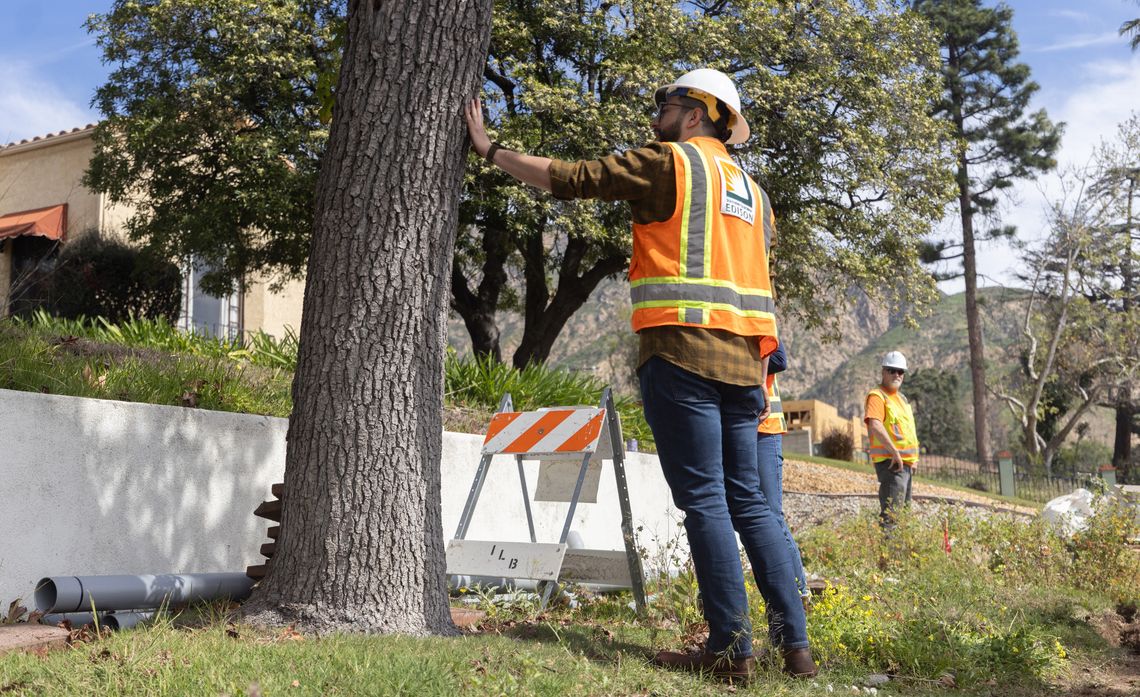
Careful planning and expert oversight help guide undergrounding work around trees in Altadena’s canopy‑covered neighborhoods.
“It’s a balance,” Avila said. “We’re trying to provide safe, reliable electricity for everyone, while also doing everything we can to protect the trees that people care so deeply about.”
Lately, Avila and his team have been focused on striking that balance in Altadena, where crews are undergrounding power lines as part of rebuilding efforts following the Eaton Fire.
Altadena is known for its dense tree canopy, including mature oak trees and deodar cedars — some of which predate the neighborhoods built around them.
“I intentionally chose to work in this area because it’s near and dear to where I grew up,” said Avila, who was raised in Baldwin Park. “There are very old, beautiful trees here, and it’s one of the reasons people love this community so much.”
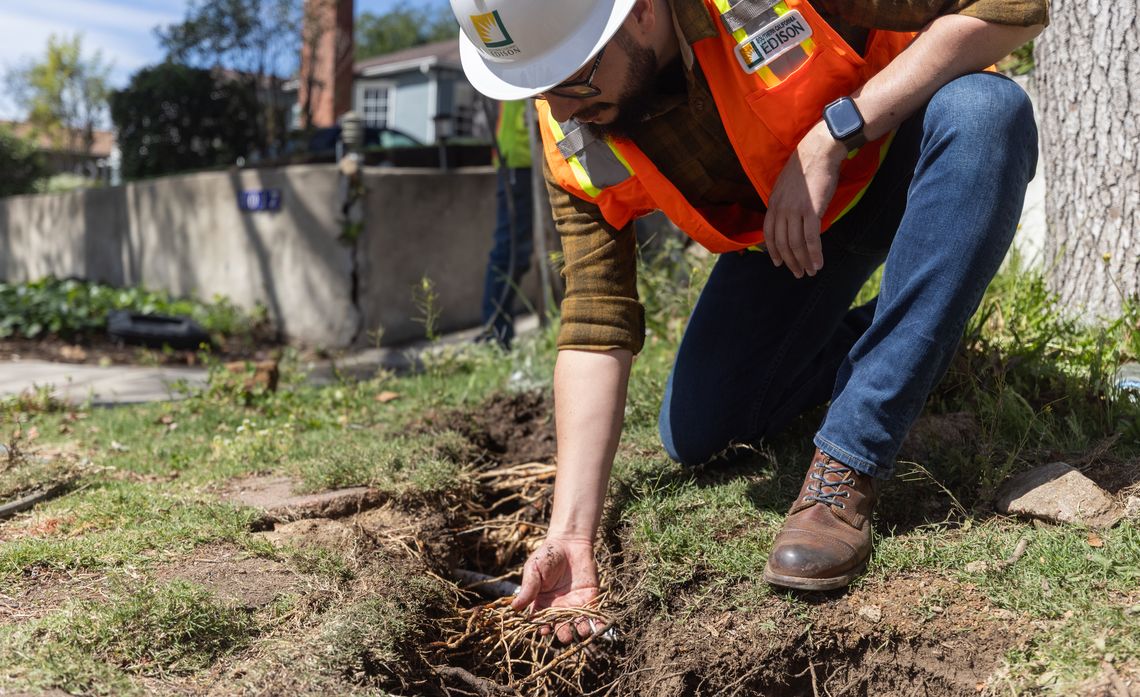
Gerry Avila inspects exposed roots in a trench to make sure trees remain healthy as rebuilding efforts move forward.
Since undergrounding in Altadena began, SCE arborists have been embedded in the project, working side by side with crews every day to guide how and where digging should happen, often recommending specialized techniques designed to preserve roots.
“We bring our arborists in early and keep them involved every step of the way,” said Brad Pensak, an SCE senior manager overseeing targeted undergrounding and wildfire rebuild efforts. “By working together from planning through construction, we can adjust where we dig, choose different methods or tunnel under root systems when possible.”
Instead of traditional excavation, crews frequently use pressurized water to gently break up soil, along with a powerful vacuum that removes mud without cutting into roots. When necessary, workers dig carefully with hand tools, instead of using heavy equipment, to avoid cutting into roots.
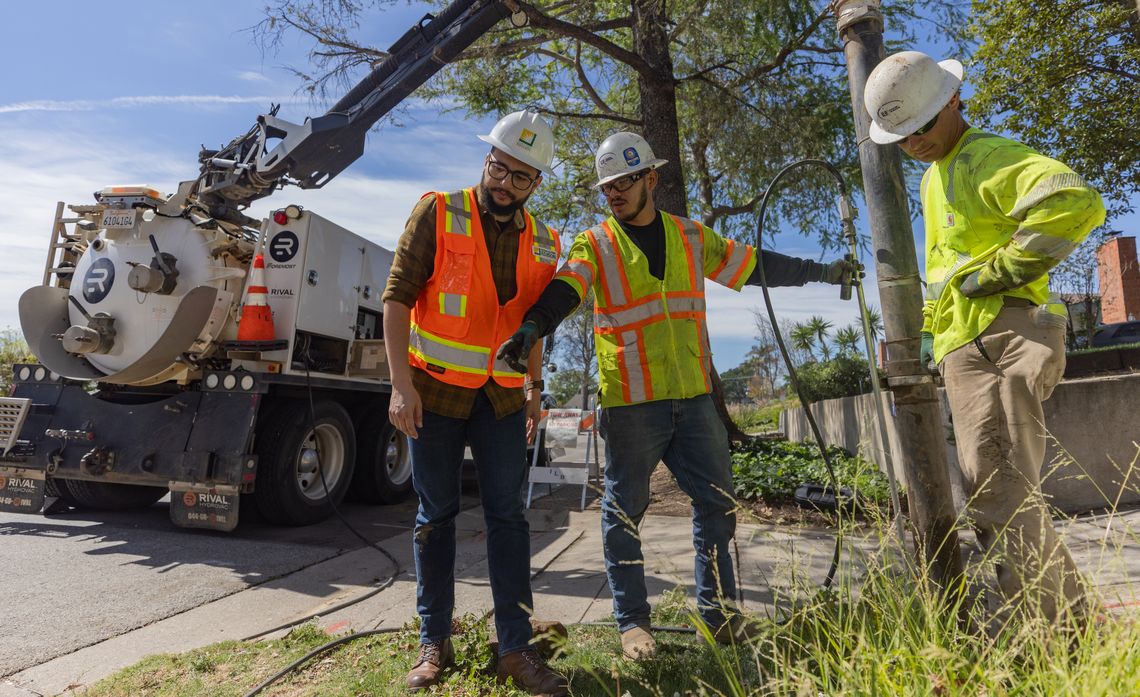
Using pressurized water and a powerful vacuum system, undergrounding crews gently clear soil while preserving tree root systems.
“Root systems are vital to a tree’s health, especially here,” Avila said. “These trees are already stressed from the fire, so it’s important that we minimize whatever impact we can.”
While the work may take more time up front, it’s done with the long-term health of trees in mind. And, once power lines are underground, it reduces the need for trimming trees away from overhead equipment, allowing canopies to grow more naturally over time.
“This gives these trees a better chance to grow healthy and strong in the long run,” said Avila.
For Avila, each visit to the area reminds him why he chose this work in the first place.
“We wouldn’t be in this industry if we didn’t absolutely love trees,” he said. “We want these trees to thrive, just as much as the residents — now and for generations to come.”
For more information on SCE’s wildfire safety efforts, visit sce.com/wildfiresafety.
Communications for this program are funded by ratepayers.