

Helicopter Crews Take Brush Clearing to New Heights



Helicopter Crews Take Brush Clearing to New Heights

Riding inside a helicopter is pretty common practice, swinging from underneath one — not as typical. But for vegetation crews in the Los Angeles National Forest, it’s just another Thursday.
“We love this kind of stuff,” said Anthony Robles, trimmer trainee for Utility Tree Service, one of the companies Southern California Edison has contracted with to help execute brush clearance work. “The locations we are flying to are very dense, very steep — not hikeable. The only way to get there is by helicopter. It’s a rush.”
SCE vegetation crews fly into hard-to-reach mountain areas, clearing brush around transmission towers to help reduce the risk of wildfire.
Bundled up and huddled up just after dawn, Robles and more than 30 other vegetation specialists are prepping for pickup at the day’s landing zone.
In groups of two, grappled in and hanging from below the aircraft, a helicopter pilot carefully lifts the pairs, hundreds of feet into the air, and gently plops them onto the side of a mountain.
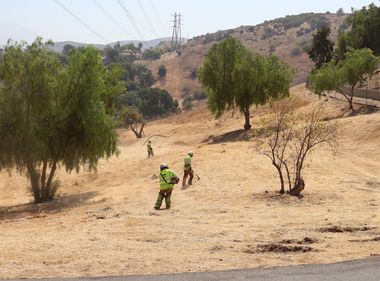
Once Robles and the rest of the crews are dropped off at the base of SCE’s transmission tower, the pilot comes back with a bag of gear. Using hand tools and, when needed, motorized tools, they meticulously manicure the buffer zone.
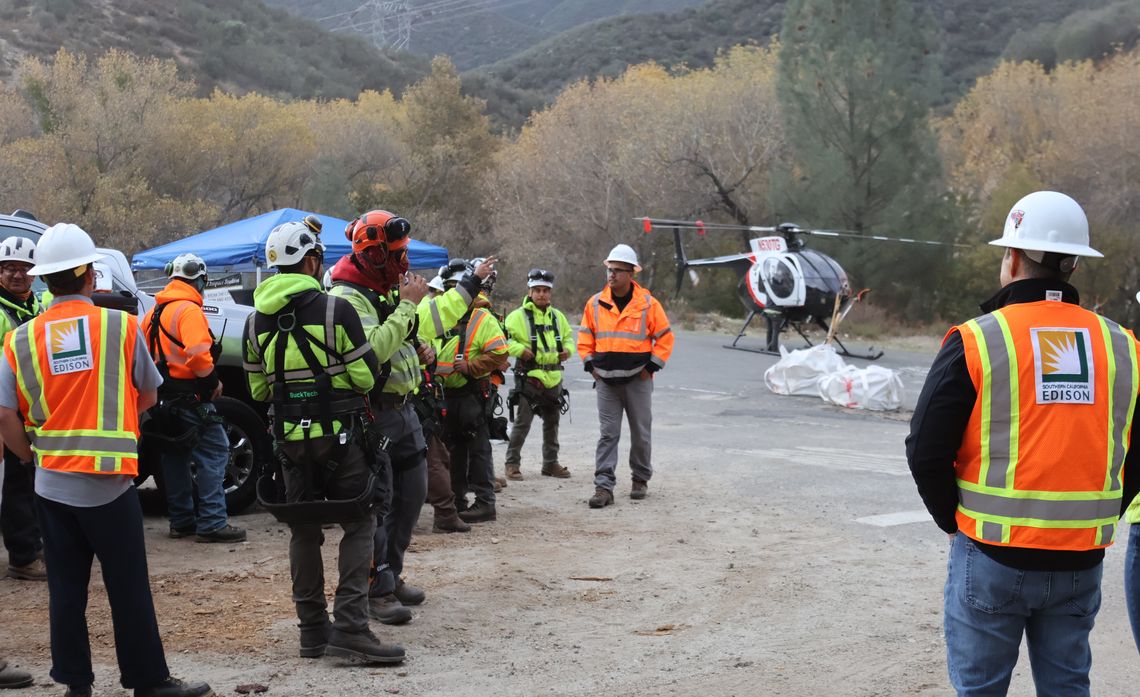
“It’s called HEC, which is short for human external cargo,” said Patrick Birkimer, SCE senior advisor for Structure Brushing. “It’s a technique where we’re using helicopters to take vegetation crews up to transmission towers in high fire risk areas that are difficult to access by foot.”
The work is part of SCE’s Structure Brushing Program, where crews clear a 10-foot radius of brush and debris from around select electrical equipment to help reduce the risk of wildfires. If there’s ever an equipment failure, this helps make sure a spark doesn’t catch nearby vegetation.
“We never really know what we are flying into until we get there,” said Robles. “Some of the brush is easy to clear but a lot of the times it requires chainsaws. It’s hard work, but it’s important work, too.”
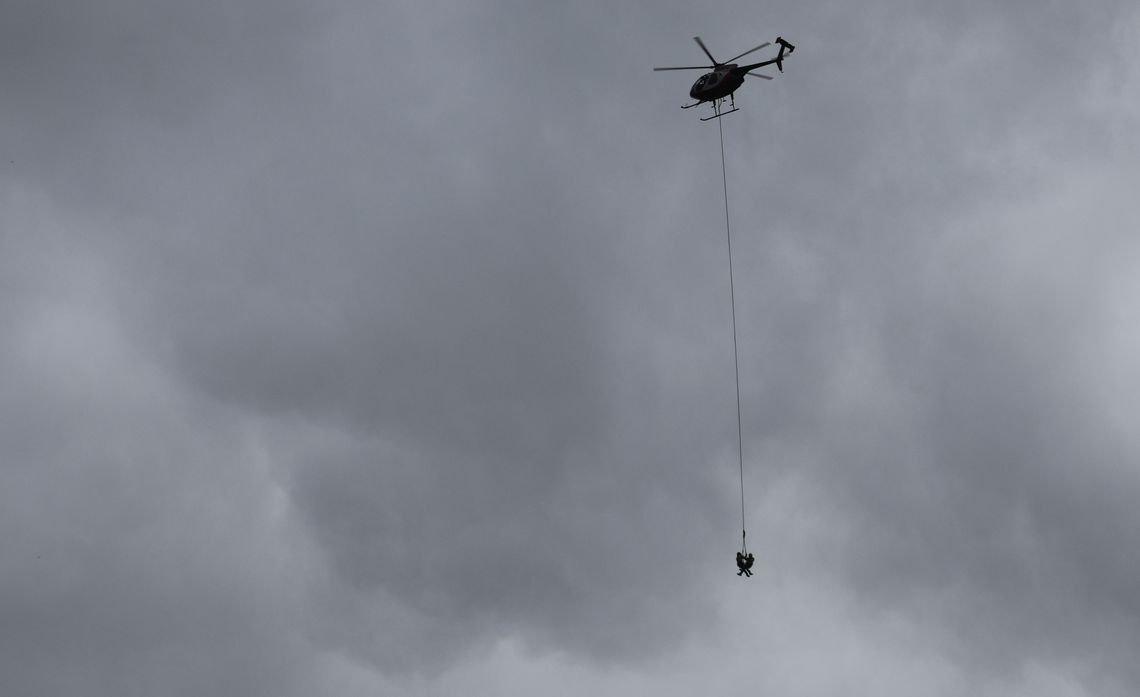
Suspended on a long line beneath the aircraft, a two‑person team is airlifted to a mountainside transmission tower that’s unreachable on foot.
After a 5- to 10-minute flight to the tower, the crews cut down overgrown brush and clear all debris from the base of the tower — a job that usually takes several hours — before getting picked back up and taken to a new location to do it all over again.
“They do about 2-3 towers a day, each,” Birkimer said. “So far, they have cleared the brush around 190 towers in the Angeles National Forest, Cleveland National Forest and the Santa Barbara County mountains.”
Previously, the Structure Brushing Program focused mainly on distribution poles. As risk models have evolved, SCE is proactively reducing the risk around transmission towers too and incorporating HEC structure brushing. As the program evolves, crews aim to clear brush from around 500 structures annually.
“As much as this job is fun and exciting, we take it very seriously,” Robles said. “Many people don’t even really know that this work exists, so we’re kind of like the people in the background, unseen, but working to help keep these communities safe — and I’m proud of that.”
For more information on SCE’s wildfire safety efforts, visit sce.com/wildfiresafety.