


Bringing life back to a landscape scarred by fire isn’t easy. It’s a long, patient process of planting trees that take decades to mature.
“The Creek Fire took everything out — it's a whole different world now,” said Sabrina Pierce, part of Camp Edison’s campground operations support group. “It looks more like a desert than a forest and animals don't really go inside anymore.”
The 2020 blaze burned 379,895 acres near Shaver Lake before dying out on Camp Edison land.
“We run a very tidy forest,” said Patrick Hanson, Vegetation Management and Forestry senior specialist with Southern California Edison. “That’s why, when the fire got to us, it only burned about 3,000 acres before it died — thanks to all the brush clearance and forestry maintenance we do.”
Although the impact to Edison’s forestland was minimal in comparison, the transformation to the surrounding wilderness was a shock to Pierce, who grew up exploring the once green, dense mountains. Since joining SCE two years ago, she’s spent hundreds of hours helping with its reforestation.
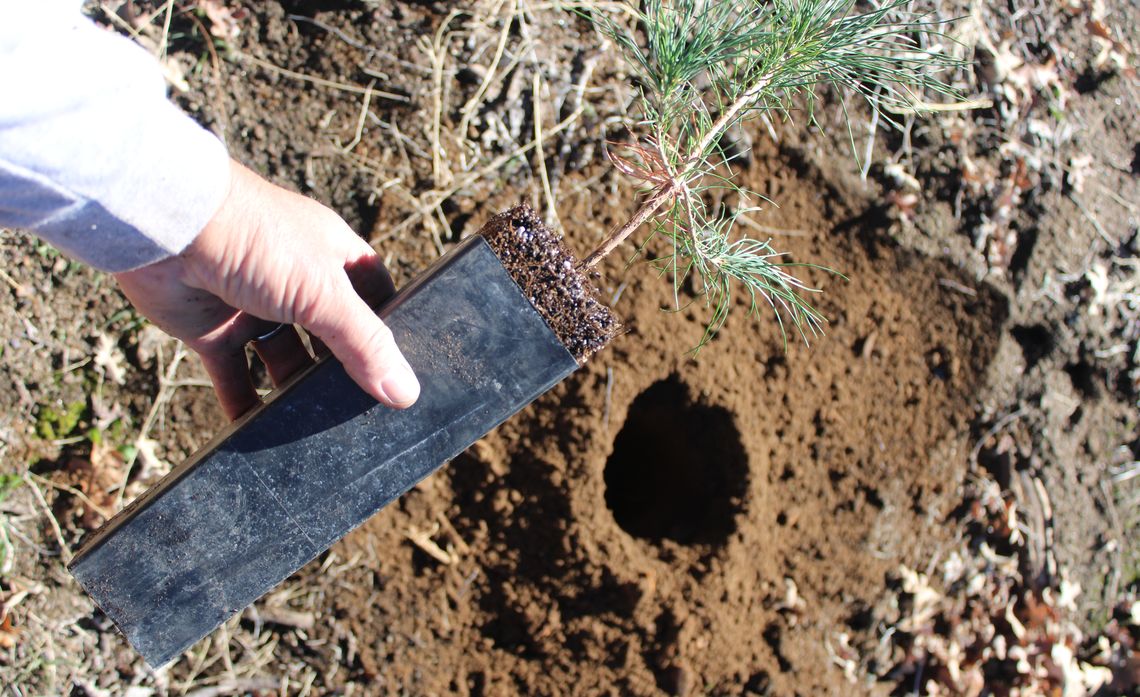
A baby pine tree is being planted near Camp Edison.
For the last five years, the SCE Forestry team has been painstakingly planting 100,000 pine trees each year — slowly but surely working to restore the forest to its original beauty.
“We plant about 200 trees per acre,” said Angus Wick, SCE Vegetation Management and Forestry senior specialist. “In the next year or so, we are on track to hit half a million trees planted.”
While 500,000 seedlings is a massive feat, the road to half a million started long before any trees went into the ground. To prep for the budding green growth, first a timber harvest takes place to salvage any standing but dead trees. Those that can still produce good lumber are sent to a mill.
The smaller unusable trees are cut, piled up and added to a controlled burn that helps with wildfire mitigation by reducing the amount of dead fuels in the area.
Next, brush that sprouted post-fire is cleared to create a clean slate for the new seedlings.
Sourced directly from the pinecones of surviving trees, the team then plants each seed in an SCE-owned nursery nearby.
“We are in that nursery eight hours a day for weeks,” Pierce said. “It’s incredibly tedious work, but I think it's cool to be able to have that footprint, knowing I had a hand in it, every step of the way.”
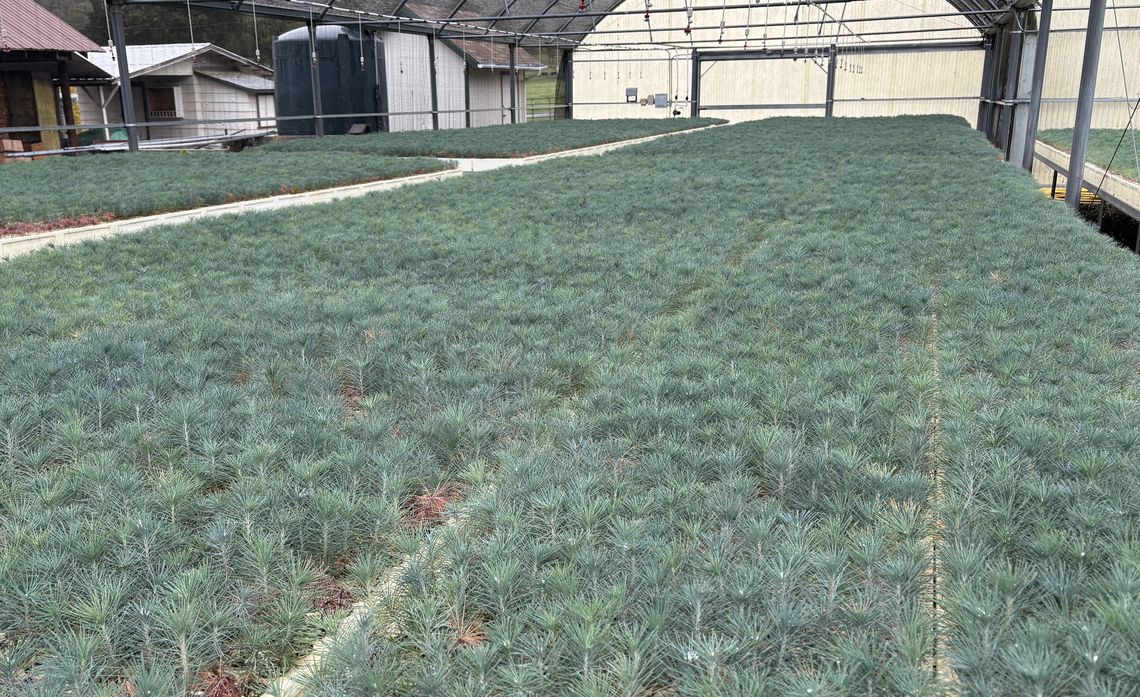
Once the seedlings have their first birthday, they’re ready to be planted. For the bulk of heavy-duty work, contractor crews plant 100 trees per day, with a survival rate of about 40-80%. Most trees that don’t survive succumb to the lack of moisture in the soil and harsh summers.
“Or sometimes, it’s because a hungry deer used the 16-18-inch baby tree as a snack,” said Wick.
That’s when Wick, Pierce and Hanson head out to replant in areas where some trees didn’t make it. Their goal is to eventually establish roughly 600,000 trees over 3,000 acres of fire-impacted forest.
While nature would eventually restore balance, the affected area wouldn’t get back to normal in this lifetime but decades in the future. The Forestry Department’s help is speeding up the recovery process through its tree planting program, but there is no instant gratification when it comes to reforestation.
“This has been a tough journey and I’m constantly learning, but we all love being here, and love doing this,” Wick said. “It's really one of the only jobs I've had where my only limitation is my imagination. And that's a pretty sweet place to be, you know?”
 and Angus Wick (right) help replant pine trees in areas that had low survival rates during the initial planting phase.=http://energized.staging1.iprdev.com/_gallery/get_file/?file_id=6931d02c3d633209d1a20bfe&file_ext=.jpg&page_id=69321b613d633267b5a20aec)

