

Why Is SCE Asking Me for an Easement?


Why Is SCE Asking Me for an Easement?

Southern California Edison is in the middle of a major wildfire mitigation effort — moving overhead electrical equipment underground in high fire risk areas, a strategy proven to reduce ignition risk. But to make this happen, SCE needs support from customers.
“We try to design around it, but in some cases, the only possible way to complete a project means we must install equipment on private roads or property,” said Genevieve Cross, SCE senior project manager. “That means we need an easement — or customer permission — to access the property for the initial installation and any future maintenance.”
SCE works closely with property owners to explain the need, answer questions and maintain transparency throughout the process.
Easements from property owners like those in Altadena allow SCE to move electrical equipment underground for safer, more resilient infrastructure.
Here’s how it works:
1. Design Phase: SCE identifies where undergrounding is needed and whether private property would be impacted.
2. Customer Notification: Impacted property owners are informed about the upcoming project.
3. Right of Entry (ROE) Agreement: An SCE land agent contacts the customer to sign an ROE — or temporary agreement — so construction can begin.
4. Construction: Equipment is installed underground.
5. Easement Negotiation: The land agent returns to secure and finalize a permanent easement agreement — usually done in tandem with construction. Customers are compensated for both the ROE and the easement based on fair market value.
“While we understand easements can be inconvenient or confusing, our goal is clear: protect communities from wildfires through safer infrastructure,” Cross said. “We hope customers see this effort as a partnership — a shared investment in community safety and resilience.”
For many of the areas where easements are needed, existing agreements may already be in place for the overhead equipment, but new ones are necessary to relocate those lines underground.
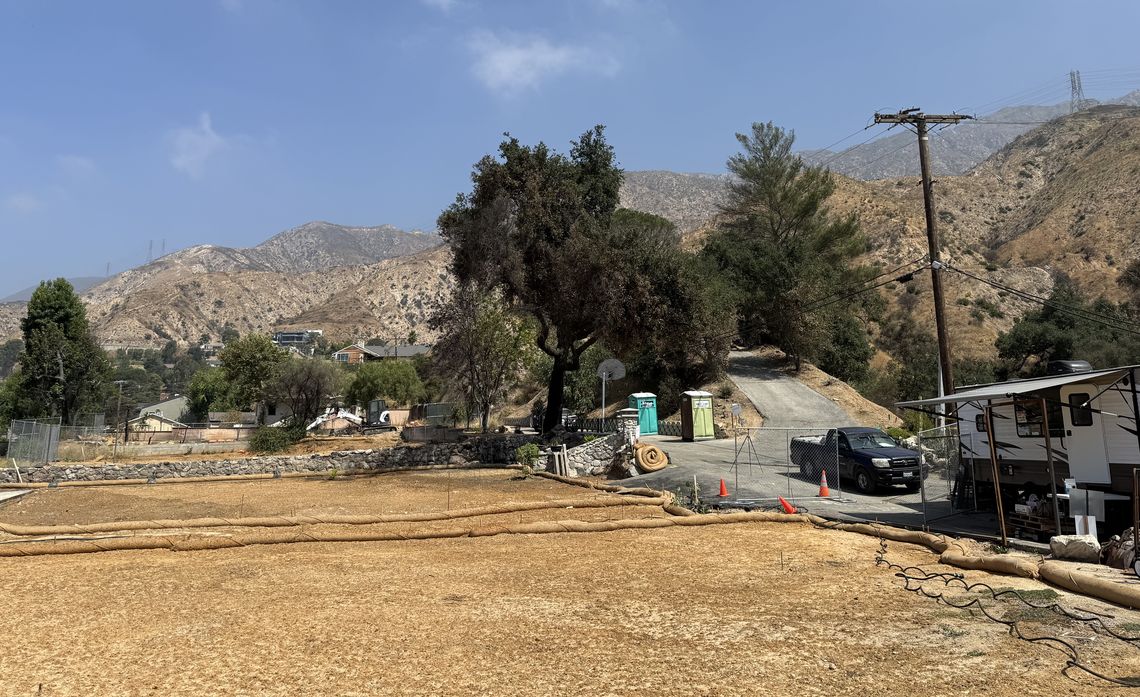
Undergrounding in high fire risk areas requires easements to install and maintain equipment on private land.
These efforts can get complicated if even one customer declines. While planners attempt to redesign around refusals when possible, moving forward often requires cooperation from all affected property owners — otherwise the entire project could be halted.
“Granting an easement can feel like a big ask,” Cross said. “But we hope customers see it as part of a larger effort to protect their homes, their neighbors and their community from the growing threat of wildfires.”
Easement FAQ:
Q: By signing an easement agreement, does SCE own my property?
A: No. An easement allows crews to access the property for construction or maintenance on SCE equipment and for that equipment to remain.
Q: What kind of impacts will I see as a customer?
A: SCE will only enter the premises if equipment installation or maintenance is needed. Customers will be notified before crews arrive.
Q: How long does SCE need this easement?
A: Once an agreement is reached, the easement is permanent and will stay with the property even if it changes owners.
Q: Why can’t SCE work around my home?
A: During the design phase, planners try to avoid the need for easements, but sometimes the only feasible path for underground equipment is through private property. If one customer declines, the entire neighborhood may not be able to have underground lines.
For more information on SCE's wildfire mitigation efforts, visit sce.com/wildfire.