

Undergrounding Power Lines: Trenching vs Directional Boring


Undergrounding Power Lines: Trenching vs Directional Boring

When you picture quintessential California, chances are Malibu’s Pacific Coast Highway is one of the first images that comes to mind.
The iconic highway is famous for its scenic seaside views, but what’s less known is that the beautiful, narrow canyons nearby come with a serious wildfire risk.
To reduce the threat of utility equipment being the cause of an ignition, Southern California Edison is working to underground miles of power lines in the Malibu area — using multiple techniques, including what’s called directional boring, to safely complete the work as quickly and cost-effectively as possible.
“Boring is a tool that replaces the need to dig trenches during the undergrounding process,” said David Fanous, SCE’s Wildfire Restoration and Rebuild operations chief. “It is much less disruptive than traditional trenching, which is a lot of excavation and moving dirt around.”
SCE uses a tool called directional boring to underground power lines with less excavation.
Taylor Hillo and Roberto Lazarte
How it works:
Just like the typical undergrounding process, crews first use shovels and excavators to locate existing underground utilities, so they aren’t damaged in the process.
Holes are then dug to install concrete vaults underground. These act as an access point when lineworkers need to work on the system.
The next step, trenching, is where things branch away from the usual approach.
Unlike the typical method that requires crews to dig up large stretches of the streets where lines will be buried, boring only requires sporadic holes along the project line.
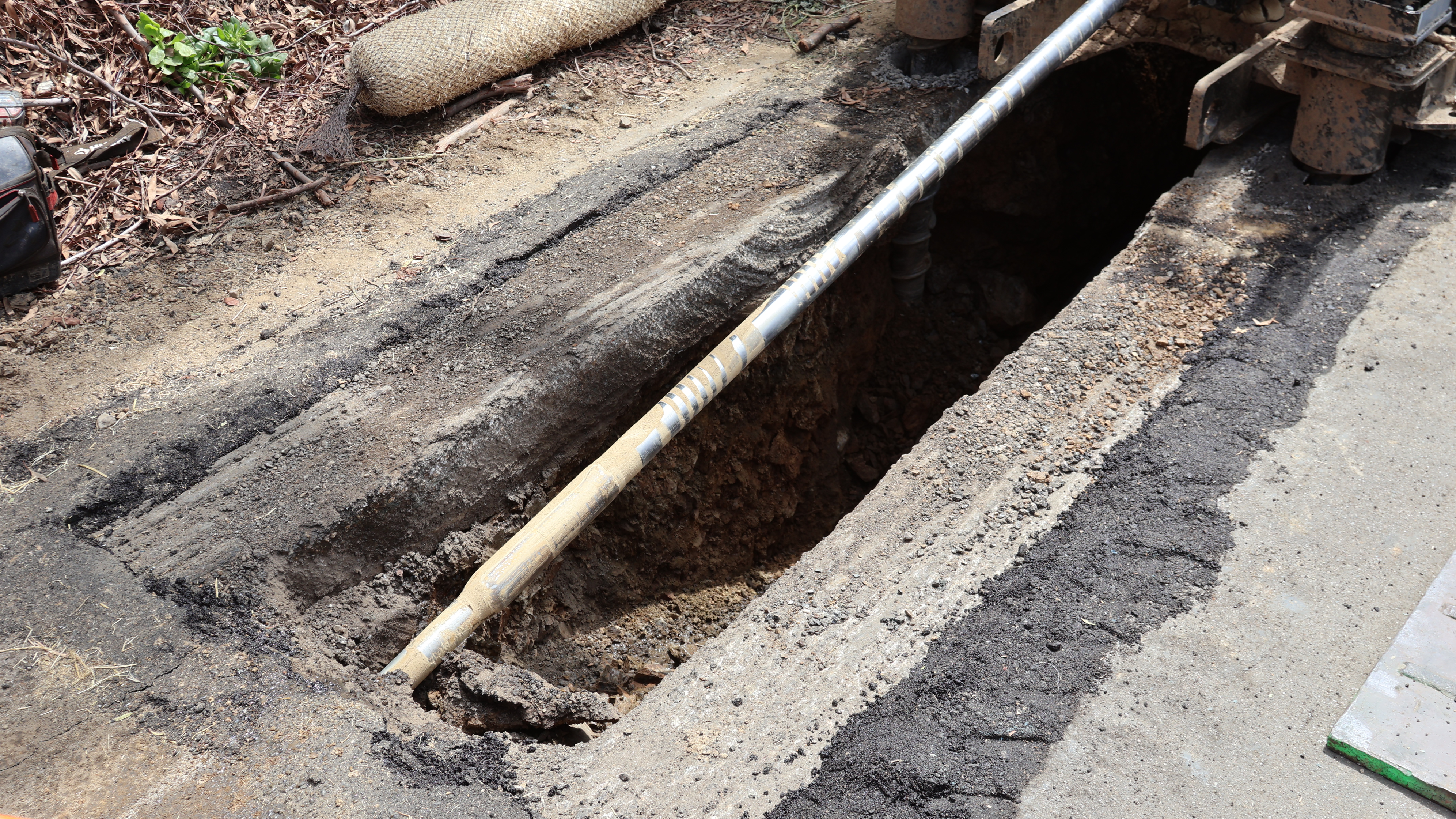
"We excavate at the beginning and at the end — so an entry hole and an exit hole,” Fanous said. “They drill the pilot hole first, then the machine is essentially threading a needle underground and coming right back up at the second hole opening.”
While one crew member mans the boring machine, another acts as its eyes, standing ahead of the drill guiding it with a locating device that relies on radio frequencies. This helps the drill stay on target and pop out in the right spot.
Once the drill has created a path connecting the holes, crews hook conduit to a separate drill bit and reverse it back through the openings. The conduit will eventually connect to the underground vaults and power lines will run through.
Why boring:
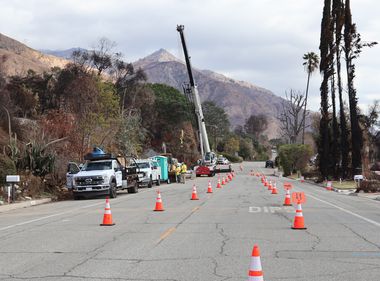
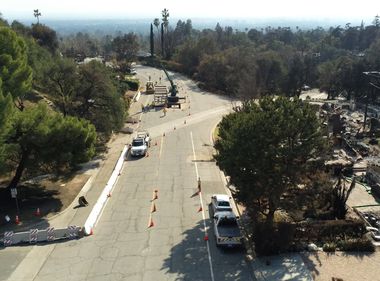
“In the area we’re using directional boring, the terrain is rocky, and given the tight, narrow roads and how winding they are, it would be difficult to dig up the entire area,” said Fanous. “It would be a lot of dirt, which has to go somewhere. Trucks would need to go up and down the mountains which is tough and costly.”
A benefit of the boring method is its pace — crews can complete about 400 to 600 feet per day.
“In open trench, you are typically getting around 150 to 250 feet a day,” said Fanous.
While this process can be quicker, involves less excavation and requires minimal repaving, it’s not something that can be used in all undergrounding locations. The boring machine itself is large and cannot be easily moved.
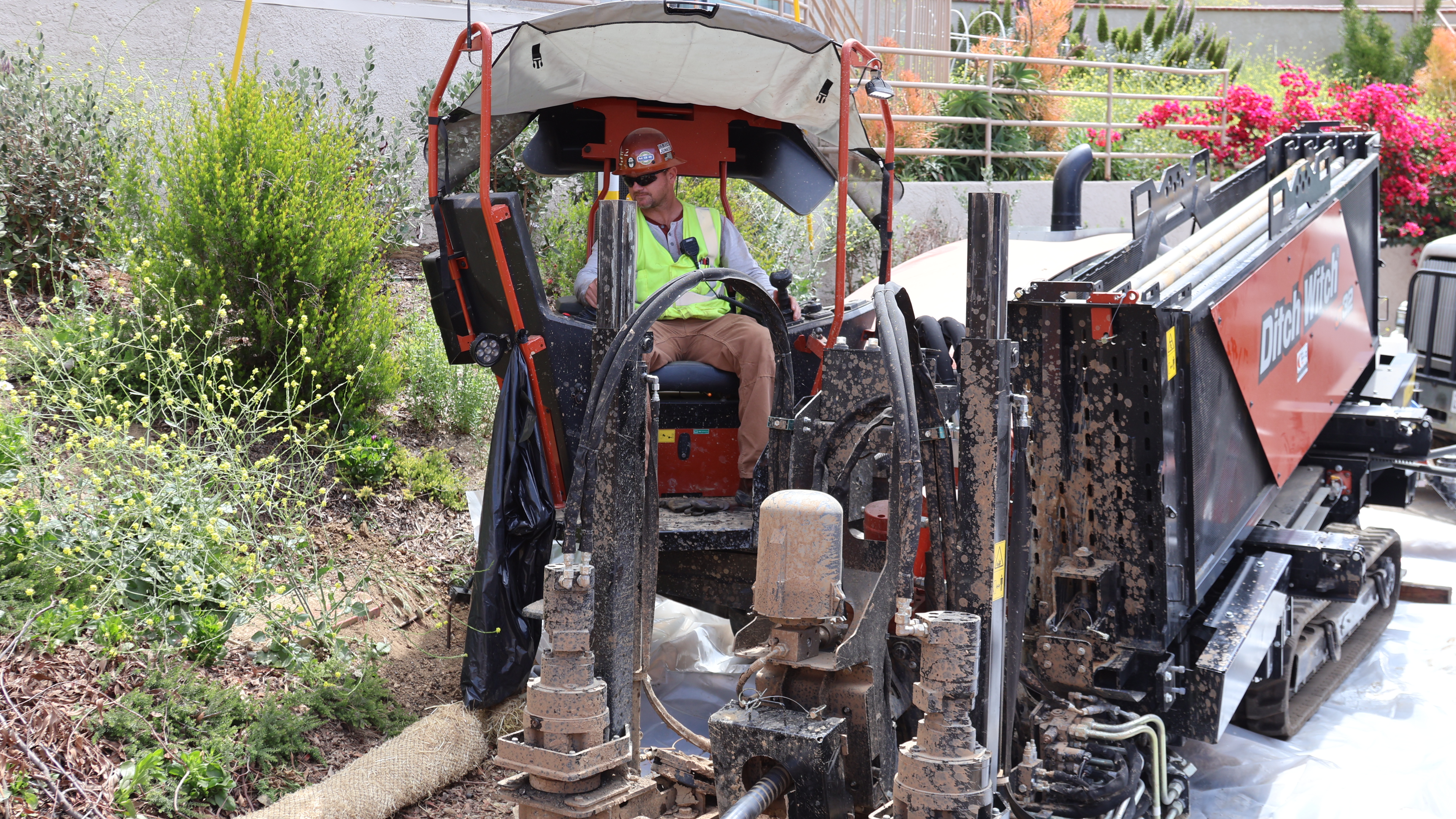
Once it has been delivered to the site, it has to stay there throughout the duration of the construction, which means roads must be closed. And sometimes, open trenching just makes more sense from an engineering standpoint.
So far, SCE has completed one mile of boring with plans for another mile and a half. This is part of 20 miles that are currently in construction, and crews anticipate identifying more locations to use boring as they move forward on a larger 90-mile plan in Malibu.
“We understand that this construction can be a bit of a pain now, but we hope customers can understand that the long-term gain is a more resilient electric grid,” Fanous said. “This project will lessen the threat of wildfires and help reduce the number of Public Safety Power Shutoffs.”
For more information, visit sce.com/wildfire.