
Darris McCoy spends a lot of time looking down — not because he’s having a bad day, but because it’s a crucial part of his job. He leads a team of locate technicians who map out areas where digging is planned, uncovering the hidden maze of underground utility lines that could be hazardous if damaged during the work.
“What’s underground may be out of sight, but it shouldn’t be out of mind,” said McCoy, an assistant manager of Operations Management at UtiliQuest, a company contracted by Southern California Edison.
McCoy and his team respond to requests from people who contact 811, known as DigAlert in Southern California. This free service notifies utilities of planned digging so they can work with companies like UtiliQuest to mark underground lines before work begins.
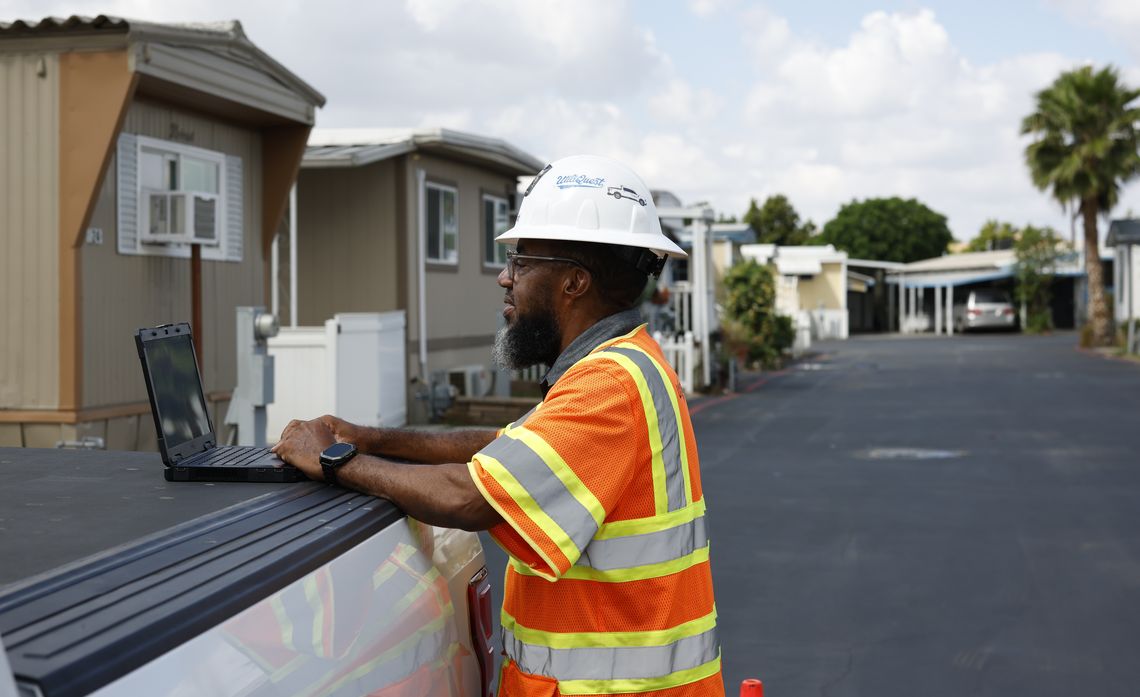
Reviewing maps and 811 requests on his laptop, Darris McCoy, assistant manager of Operations Management at UtiliQuest prepares to locate underground utility lines at a mobile home park in San Bernardino.
McCoy started his day at a mobile home park in San Bernardino, where a resident planned to do some home upgrades.
“These are some of the most challenging places we work because unlike with newer developments, there’s often decades of utility lines that got layered, rerouted or adjusted over time,” McCoy said. “Every spot comes with its own layout and challenge. Utility lines don’t always follow predictable paths, and as the earth shifts, so do lines. It’s never safe to assume where or how deep underground they are.”
For locate technicians, that means slowing down and relying on their tools: measuring tapes, maps and handheld locating machines with electromagnetic signals to trace utility lines from the surface. Next, they plant flags and/or spray paint on the ground, translating what’s invisible into a visual warning system for those digging later.
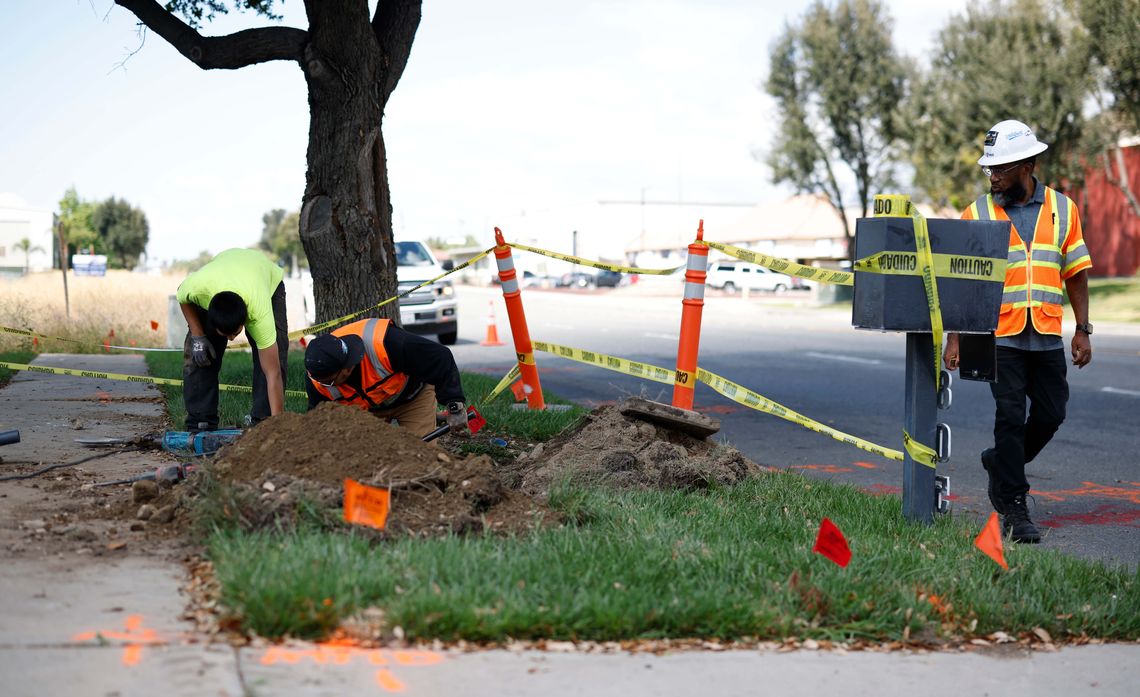
Contractors carefully dig around color‑coded markings that show where underground utility lines are located.
“Most times, when people see us, we’re already done,” McCoy said. “They see the paint and think that’s all there is to it, but it’s part of a whole system set up to prevent accidents from happening.”
Rounding out an accident-free day, McCoy checked in on some contractors working around freshly marked lines near a warehouse unit. Commercial sites tend to carry higher risks: larger excavation areas, heavier equipment and more infrastructure packed into a single footprint.
“It doesn’t matter if someone is planting a tree or doing major construction,” said Ted Gribble, Southern California Edison’s principal manager of wildfire and public safety. “Whenever digging is involved, safety starts long before the ground is broken.”
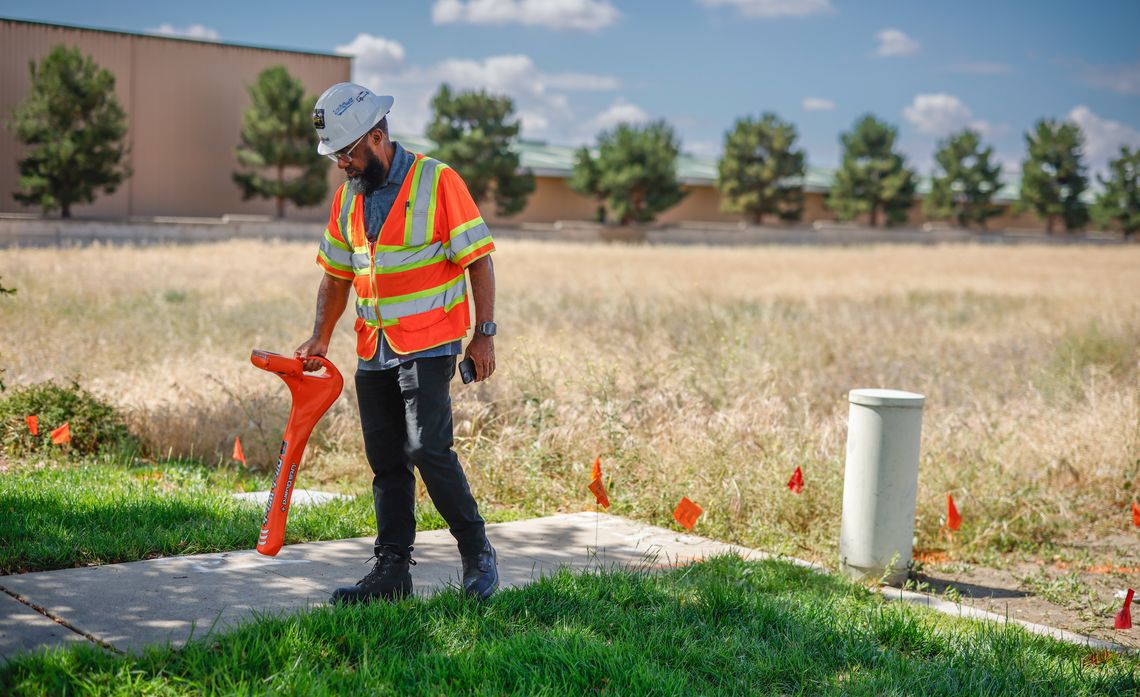
Handheld locators help technicians detect the paths of underground utility lines hidden below the surface.
Markings are an important first step, but digging still requires care. If something goes wrong — even a small scrape on a line — it’s important to stop work and contact 811 so the issue can be inspected and addressed before it becomes a larger safety problem.
As summer approaches, McCoy expects the annual surge of 811 requests from home renovations and construction projects. He welcomes each new request as a chance to prevent something from going wrong. And while most people never see the work that happens before the paint dries, it’s a critical step in making sure digging projects begin and end the same way: safely.
“811 is a service designed to keep people safe,” McCoy said. “It costs you nothing. There are entire teams dedicated to making sure digging happens the right way, so use this resource.”
For more information, visit sce.com/safety.
Communications around safety are funded by ratepayers.