
What if your home could store sunshine and save its energy for later? With a battery it actually can. In the last two years, Southern California Edison has seen a 600% increase in solar applicants also opting to add battery storage to their home systems.
By pairing the two, customers can store the excess energy solar panels generate throughout the day — that would otherwise go back to the grid — and use it later when energy costs are higher, during an outage or even in a Public Safety Power Shutoff (PSPS) event.
“A solar battery system acts as a buffer, so it can shield you from changes in energy prices or power outages,” said Robert Hagstrom, customer programs advisor at SCE's Energy Education Center.
So far, SCE customers have installed over one gigawatt of energy storage — enough to power 750,000 homes for an hour. This is in addition to more than 8 gigawatts of utility-scale storage that SCE has added — enough to power 2 million homes for four hours.
Lower Prices
Energy is usually most expensive from 4 to 9 p.m. as the sun sets and people arrive home from work and use more electricity, but by using the stored solar power in your battery, you can save on electric bills. During peak pricing periods, a battery can tap into the solar energy it saved throughout the day, instead of relying on the electric grid, allowing you to use it until electricity prices decrease.
SCE offers rebate programs and incentives including the Self-Generation Incentive Program, which helps offset installation costs.
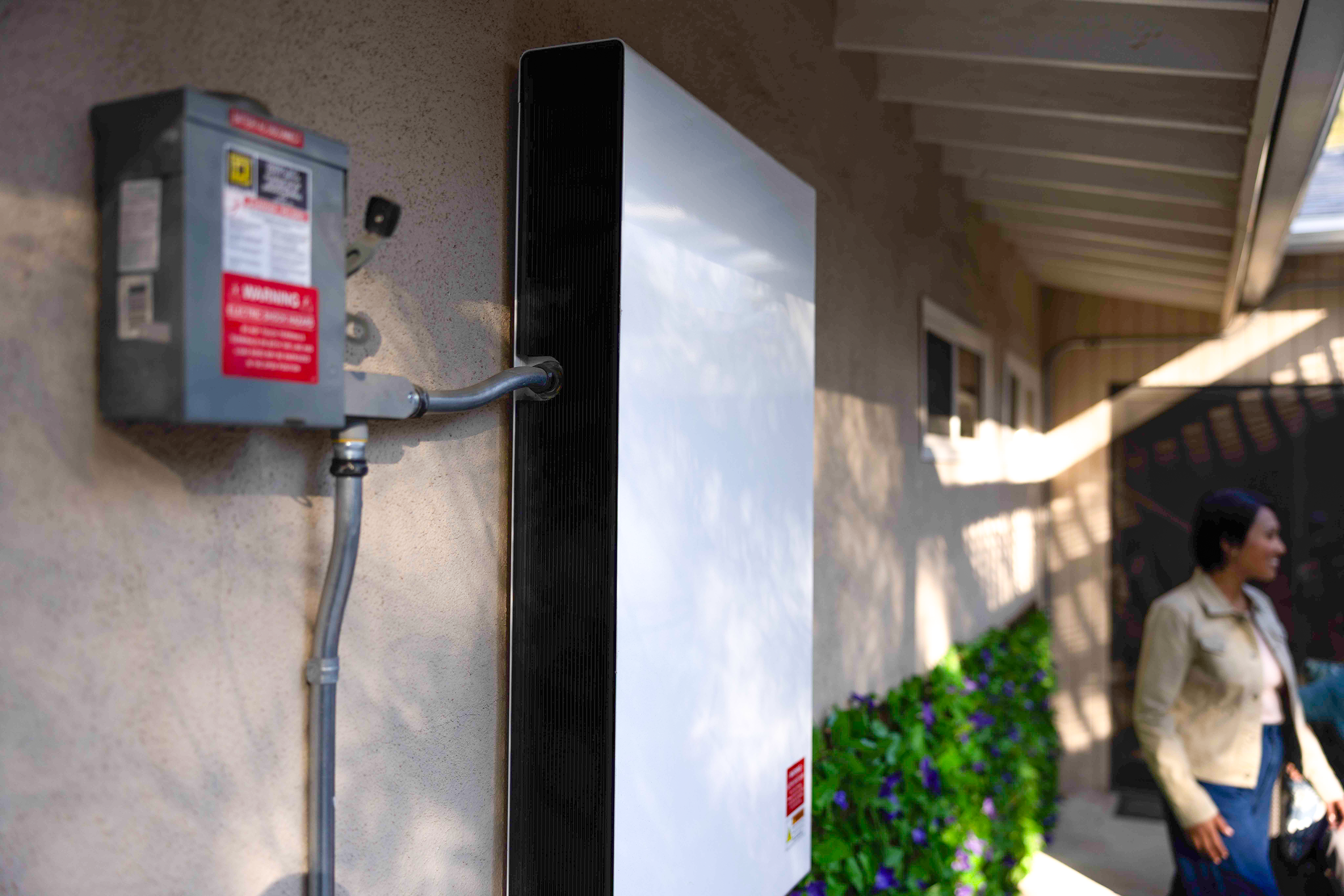
During an outage, a battery’s power control system releases stored solar energy into the home’s circuit to provide energy.
Resiliency
Having a battery can cocoon you from disruptions, whether it’s a planned maintenance outage where crews are making upgrades to the electric grid, or extreme weather causing a PSPS event.
When the power goes out, a battery’s control system kicks in to release stored energy into your home — keeping phones charged, food refrigerated and your home virtually unfazed.
Clean Energy
Adding a battery also helps California reach its goal of being carbon neutral by 2045. Using electricity from a renewable energy source like solar has a smaller environmental footprint than power plants using natural gas or other fossil fuels.
For more information on SCE’s solar programs, visit sce.com/gosolar.