

Reducing Wildfire Risk in Camarillo


Reducing Wildfire Risk in Camarillo

For most, driving down the 101 freeway can be a nightmare. That’s why seasoned commuters often use back roads to bypass some of that rush hour roulette.
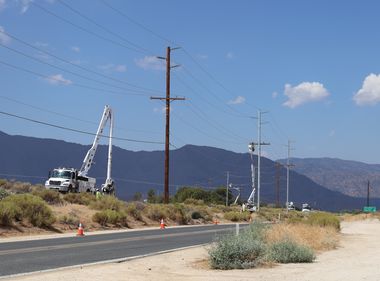
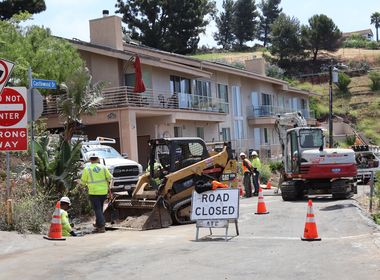
Over the past few months, many hoping to hurry around the highway may have ridden along Potrero Road, where crews have been working to underground a mile and a half of power lines.SCE buries a stretch of power lines in a high fire risk area near California State University Channel Islands.
“This is a highly frequented alternative to the 101 in Ventura County, right near California State University Channel Islands,” said Jordan Slider, Southern California Edison project manager for Targeted Undergrounding. “It’s a two-lane road, has lots of dry brush around, with egress and ingress issues. If a fire were to break out here, it would have a lot of growth potential.”
The narrow road — with only one way in and one way out — makes it difficult for residents to evacuate and fire departments to respond. The canyon topography also poses a threat during dangerous weather conditions, like high winds, which could intensify a fire in the dense, dry surroundings.
SCE flagged the site as a severe risk and added it to the list of locations scheduled for targeted undergrounding — where overhead lines are relocated underground. The process is part of SCE’s Wildfire Mitigation Plan, which aims to reduce the risk of electrical equipment becoming the source of ignition or worsening a fire.
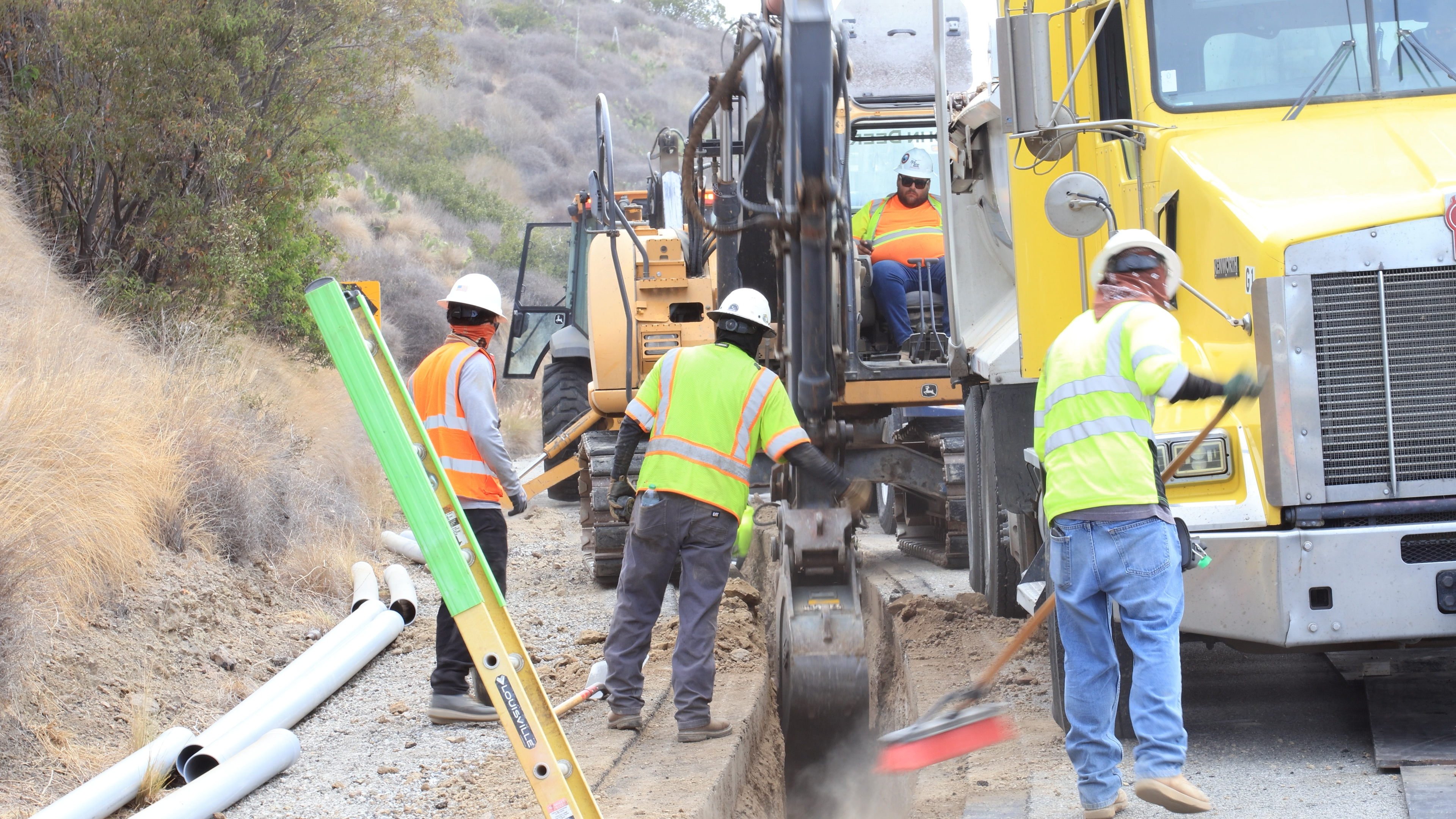
Crews dig out the trench path that will house underground wire and conduit.
“We are doing everything we can to help keep these communities as safe as possible,” said Slider. “By undergrounding this section of line, we not only reduce the risk of a wildfire, but also increase reliability, as the equipment is protected from extreme weather conditions.”
Since 2018, crews have completed nearly 50 miles of undergrounding, with plans to do another 200 miles in high fire risk areas by the end of 2028.
While SCE believes undergrounding is an important tool to help mitigate utility-caused ignitions, undergrounding is not always possible, due to terrain and other factors.
Overhead wires can stretch across mountains, but underground equipment must follow roads or have new routes excavated.
“There are situations where we find there are too many existing structures underground or the ground is too difficult to dig through, but luckily, we didn’t see those issues here,” said Slider.
In this case, crews were able to follow the backroad’s established path to house the underground system.
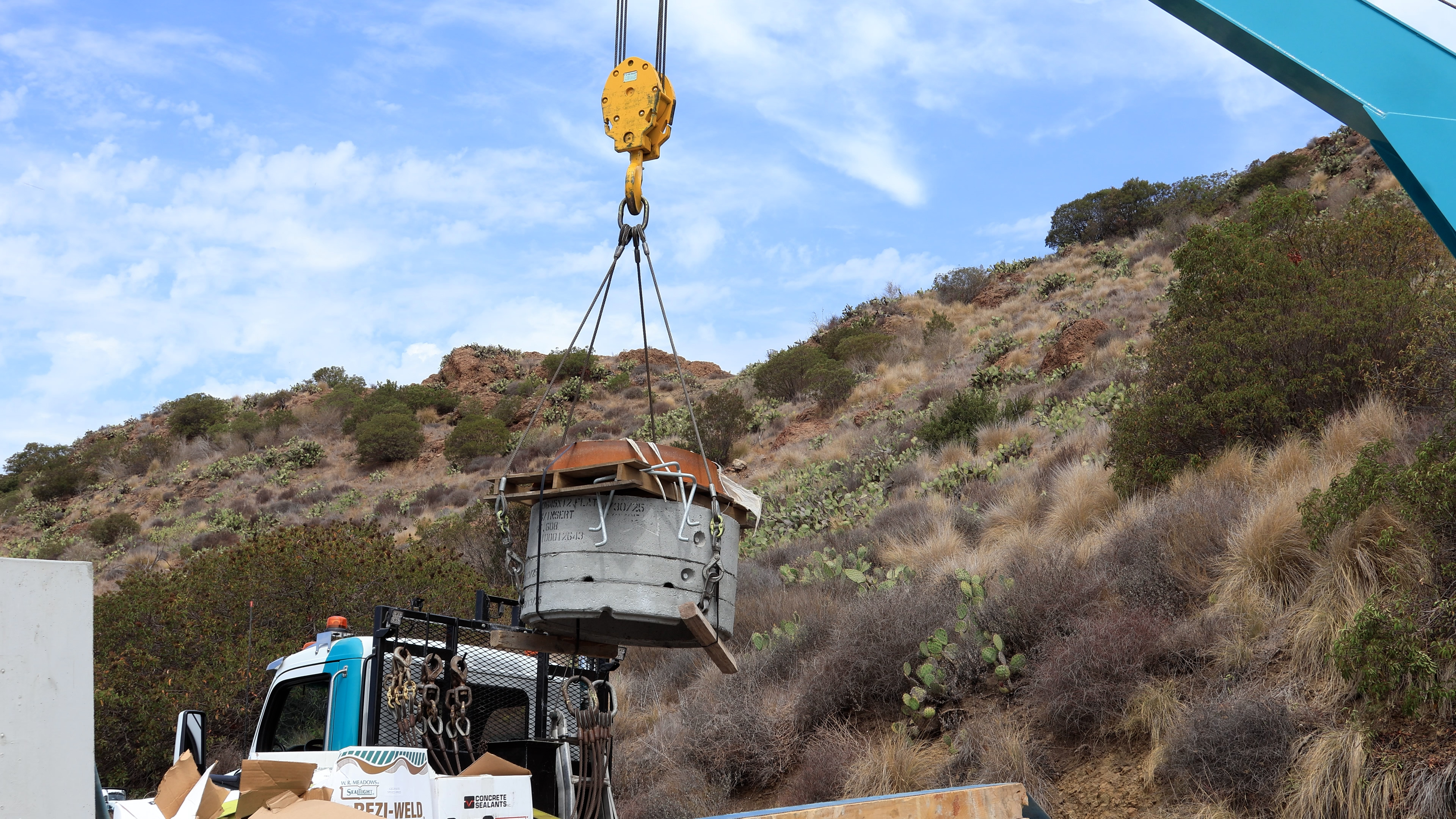
A crane lifts part of a manhole — an underground structure that will act as a maintenance point for crews to work on the system.
“One thing we did need to account for was the curvature of the road, which is why we decided to install a manhole — a structure that acts as a junction point, so cable doesn’t get snagged when pulled at an angle underground.”
Manholes are just one type of underground structure; the others are vaults and pull boxes. Any of them can be used as an access point for crews to perform maintenance work.
Once the structures are set, the conduit and cable are placed along trenches, crews can deenergize the overhead wire and energize the new underground system.
In areas where undergrounding is not possible, SCE has installed other wildfire safety technology, including more than 6,000 miles of coated wire, known as covered conductor.
“We understand that this work can be an inconvenience during construction for a lot of customers, which is why we do our best to move quickly,” said Slider. “But we hope residents can understand safety is our top priority. Now, commuters will be driving along a safer road without the potential overhead hazards.”
For more information on SCE’s wildfire mitigation efforts, visit sce.com/wildfiresafety.