As a kid, Tyler Pelle didn’t hide from storms. He’d pull up a chair and watch them roll in. Those powerful weather systems hinted at a world far bigger than his New Jersey hometown — luring him as far as Antarctica for research, and most recently, here to the West Coast.
Now he’s tracking weather across the Golden State as a meteorologist at Southern California Edison, forecasting conditions that help keep communities safe.
“My version of video games was watching The Weather Channel, hearing the buzz of weather alerts and running to the patio to watch it play out,” said Pelle. “That inherent fascination in weather processes and how they affect us never really left me.”
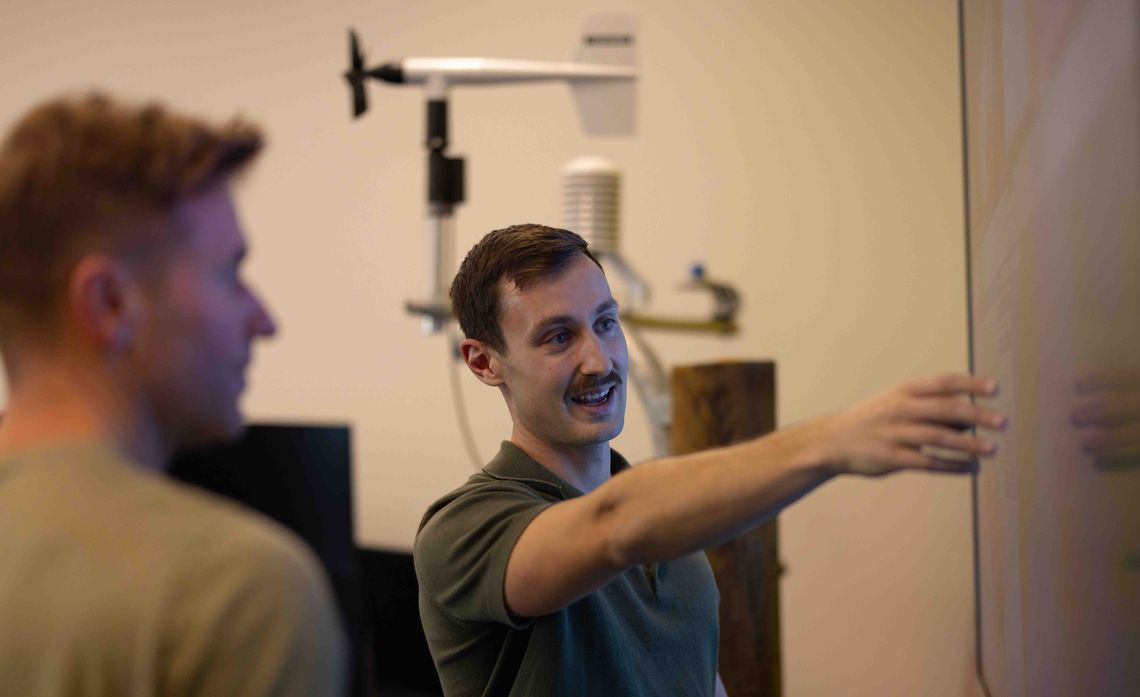
Meteorologist Tyler Pelle analyzes weather data to help SCE prepare for extreme heat, wildfire risk and other conditions that impact electric service.
Pelle is the newest member of 10 meteorologists on SCE’s Weather Services team who analyzes forecast models, satellite data and real-time observations from over 2,000 weather stations to understand what’s coming next. His team then shares forecasts with groups across the company to help inform safety decisions, including for crews working in the field, and how electricity gets delivered to customers.
“For example, during the latest heat wave that swept across SoCal, we shared our forecasts with electric grid operators,” said Pelle. “It helped them better prepare to meet customers’ higher demand for electricity from running appliances like air conditioners for longer.”
As spring turns to summer, another risk Pelle’s team keeps a close eye on: wildfire. During periods of heightened fire risk, SCE meteorologists closely monitor wind, humidity and other conditions that can increase wildfire risk across the company’s roughly 50,000-square-mile service area. Those forecasts help inform decisions like Public Safety Power Shutoffs — a tool SCE uses to reduce the risk of utility equipment becoming a source of ignition.
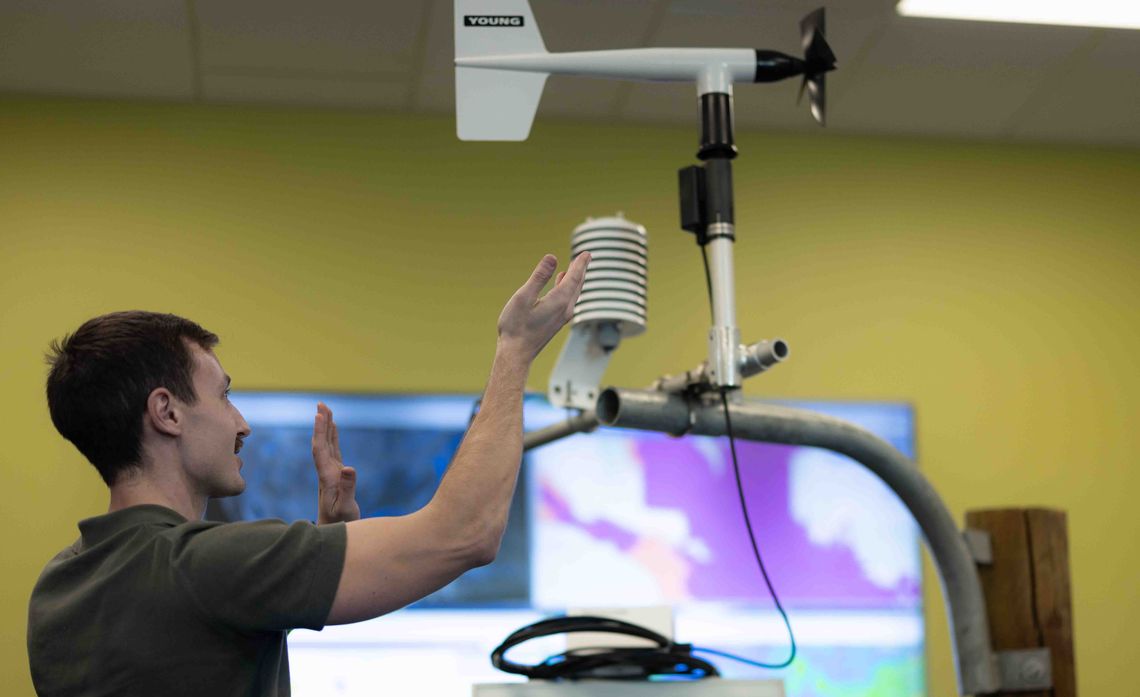
“We analyze several models to really understand what the weather is doing at each location,” said Paul Roller, SCE Weather Services senior manager. “That level of detail is critical when you’re targeting areas for wildfire‑related safety decisions.”
Forecasting extreme heat and wildfire risk is a change of scenery for Pelle. Just two years ago, he was walking among penguins in Antarctica, gathering data as part of his postdoctoral research at Scripps Institution of Oceanography to study melting glaciers and sea level rise.
While the setting has gone from polar ice sheets to power lines, Pelle’s love for research hasn’t changed. Lately, he’s been a part of exploring how various weather models perform when tested across California’s complex terrain of mountains, coastlines and deserts.
“It’s satisfying to see how both research and our day-to-day work has very real impacts for protecting and powering communities,” said Pelle. “Even minor improvements to a forecast can make a massive difference in decisions. So, the more precise we can get our forecasts to be, the more we can improve the electric system to be resilient in extreme weather.”
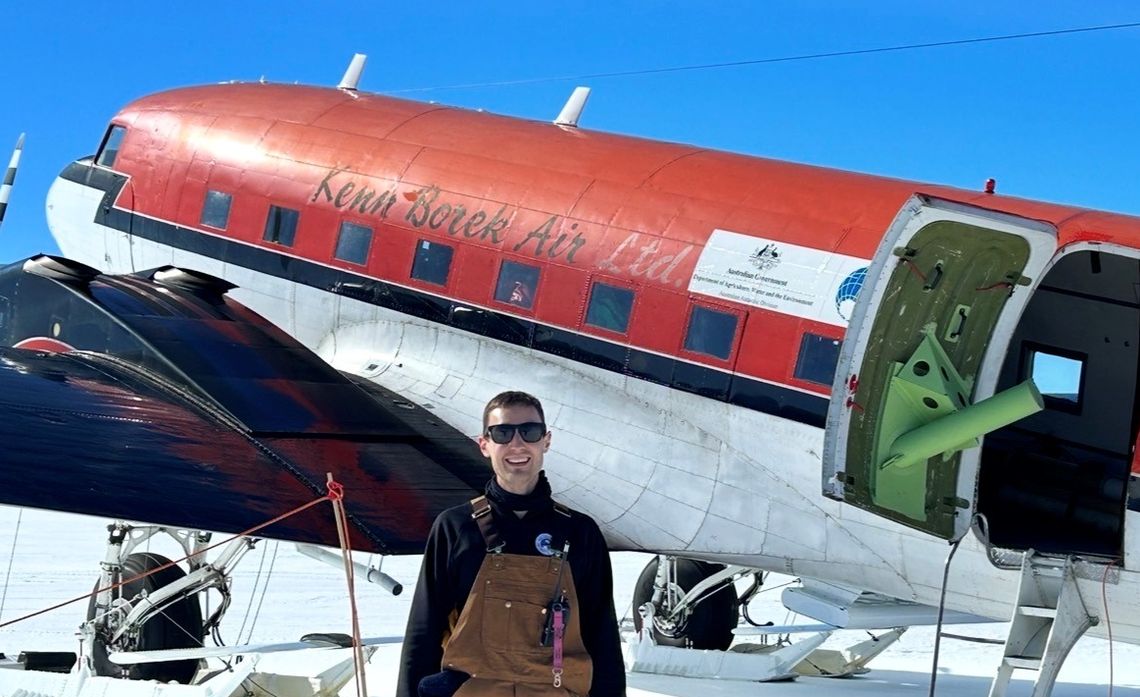
During a research expedition in Antarctica, Tyler Pelle helped gather ocean temperature data by flying along the coast and releasing sensors into the ocean from a World War II–era aircraft.
For Pelle, the work brings him the same feeling that first drew him to search the sky from his childhood porch.
“We’re constantly taking in new information and trying to interpret what story the weather is telling us,” he said. “And when you get it right, it helps people make safer decisions.”
For more information on SCE’s efforts to keep customers and the public safe, visit sce.com/safety.
Communications for this program are funded by ratepayers.