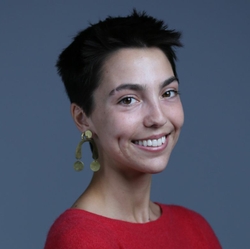
Alissa Osburn didn’t set out to build a career in the electric industry — but once she stepped inside, she kept finding reasons to stay.
“No matter how much time you spend in this industry, there’s still so much to learn,” said Osburn, a troubleman field supervisor at Southern California Edison. “And if you ever think you’re done learning, you’re not. That’s what’s kept me around — why I love it.”
Her dad was a power plant operator at SCE, and stories about the electric grid with lineworker family friends were regular dinner table talk. So when she took a job after high school as a meter reader for SCE, it felt like a natural step.
“I didn’t have a clear path laid out, so I just explored,” said Osburn, who has worked at SCE for 17 years. “Now I’m out in the field, helping to guide how and when crews do their work.”
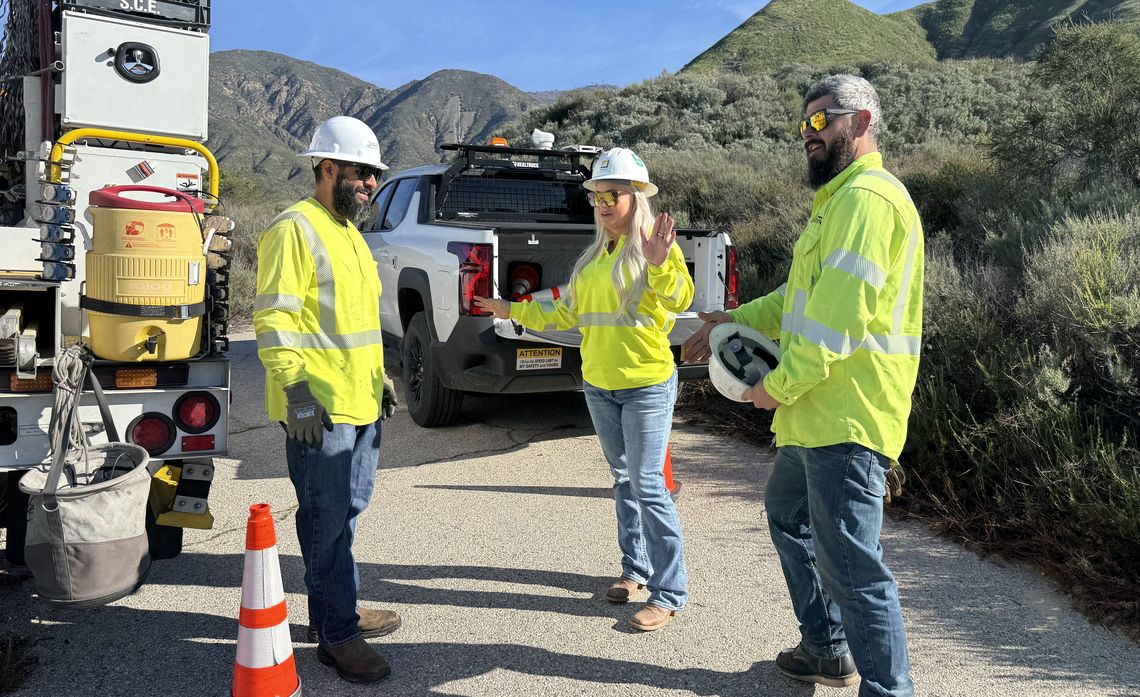
Alissa Osburn talks through the day’s work with a troubleman and lineworker, coordinating how to temporarily shut off power on sections of lines, so crews can safely replace a utility pole.
Osburn spent two years knocking on customers’ doors to read meters in the high desert before she moved to hands-on work with electrical systems as a substation operator. In her new role, she was in charge of manually rerouting power inside substations — a job that requires laser focus and strict attention to safety.
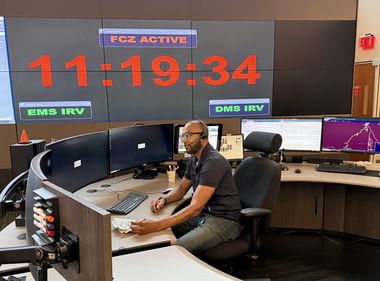
Once Osburn had her kids, she looked for less physically demanding work while still staying close to grid operations. Moving inside the control room, Osburn spent the next decade as a system operator routing power — this time, remotely — across more of SCE’s service area.
“With each role, I explored different sides of the system, ways to understand it and how people work together within it,” said Osburn. “The trust I’ve built with co-workers over time makes all the difference, especially in these spaces where roles are highly specialized.”
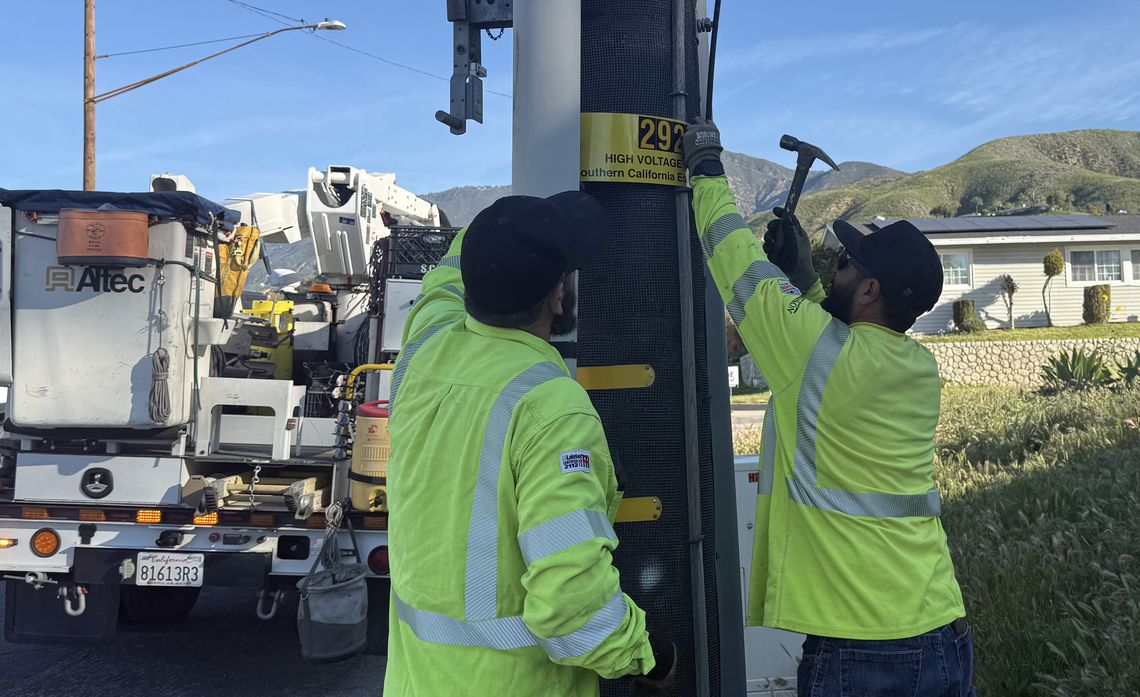
These experiences prepared Osburn to return to the field as a troubleman field supervisor three years ago. She spends mornings prioritizing and planning work for troublemen across a vast swath of the Inland Empire before heading into the field to see the work unfold in real time.
The fieldwork Osburn supports is largely male‑dominated, but she says that reality never stopped her from leaning in. Leading with confidence is something Osburn not only loves to do herself, but see in others as well.
“I don’t sugarcoat the fact that it’s hard work,” she said. “But I’ve always encouraged the people around me, especially women, to try things out if they have interest in it. I tell them, ‘Try it out, they teach you every step of the way.’”
That same mindset carries into all parts of Osburn’s life. Outside of work, she spends time supporting her daughter in making a name for herself in the competitive rodeo scene.
“At work, in the saddle, wherever — you can build any kind of skill by showing up, staying curious and putting in the work,” said Osburn.
She wants her journey to make an impression on those who may have shied away from taking on challenges that appear to be intimidating or carry a lot of responsibility.
“Once they see me doing it, it feels more possible,” she said.
For more information on career opportunities at SCE, visit sce.com/careers.Communications for this program are funded by ratepayers.