

Woodpeckers Meet a Stronger, Safer Electric Grid


Woodpeckers Meet a Stronger, Safer Electric Grid

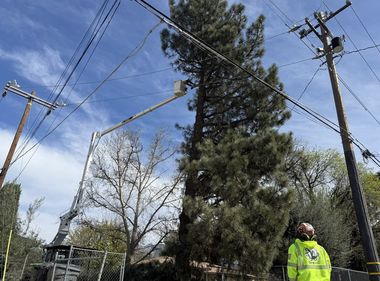
Many Americans know Woody the Woodpecker, the 1940s cartoon inspired by a North American species. But in California, it’s the unique tap‑tap‑tap of the native acorn woodpeckers — on trees, houses and even wooden utility poles — that’s most recognizable.
The sound is especially familiar to Southern California Edison crews.
“Anywhere there’s acorn woodpeckers, we know to keep a close eye on the poles nearby,” said Jason Yasumura, a field supervisor who’s nearing 30 years at SCE. “They make holes and stuff acorns anywhere they can. It weakens the poles’ structure; and when certain parts of our equipment get clogged with acorns, it can trap heat inside, melt materials and lead to outages or safety risks.”
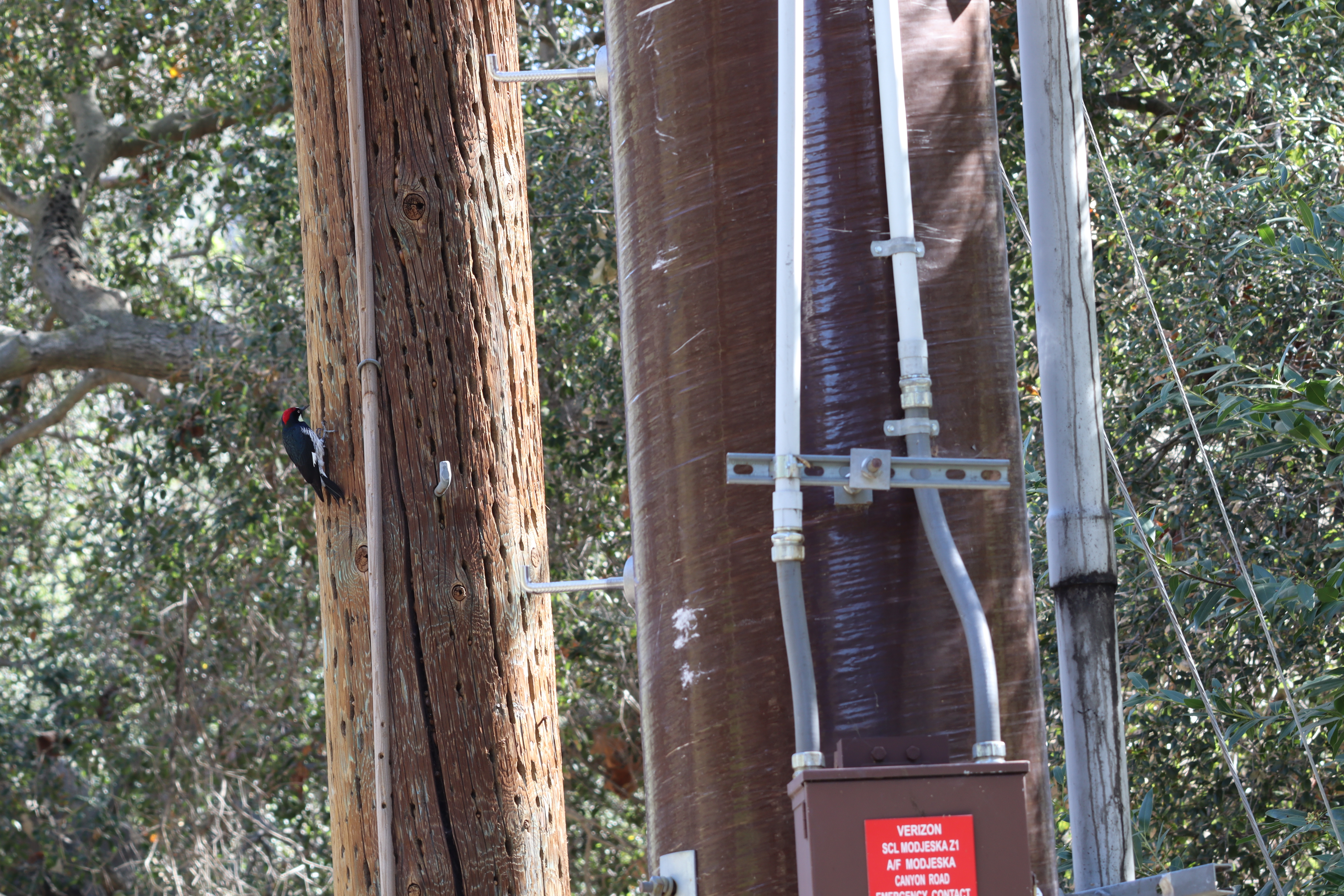
In the oak‑lined canyons where acorn woodpeckers thrive, the poles play a key role in keeping electricity flowing safely. Those same densely vegetated spots that attract woodpeckers also tend to be high fire risk areas — where making upgrades like replacing wooden poles with more fire-resistant fiberglass prove especially critical for nearby customers.
The benefit: Fiberglass poles are not as soft as the dead wood that acorn woodpeckers prefer, making them far less attractive for drilling nest cavities or storing food.
“It’s a win‑win,” said Kara Donohue, manager of SCE’s Avian Protection program. “Since the woodpeckers are less likely to damage or nest in fiberglass, it lowers crews’ likelihood of having to disturb those birds during emergency repairs. It’s a change that reduces future impacts on birds while improving safety and reliability for high fire risk communities."
For each pole upgrade, crews like Yasumura’s collaborate closely with Donohue’s environmental team to protect the woodpeckers, including following the Migratory Bird Treaty Act.
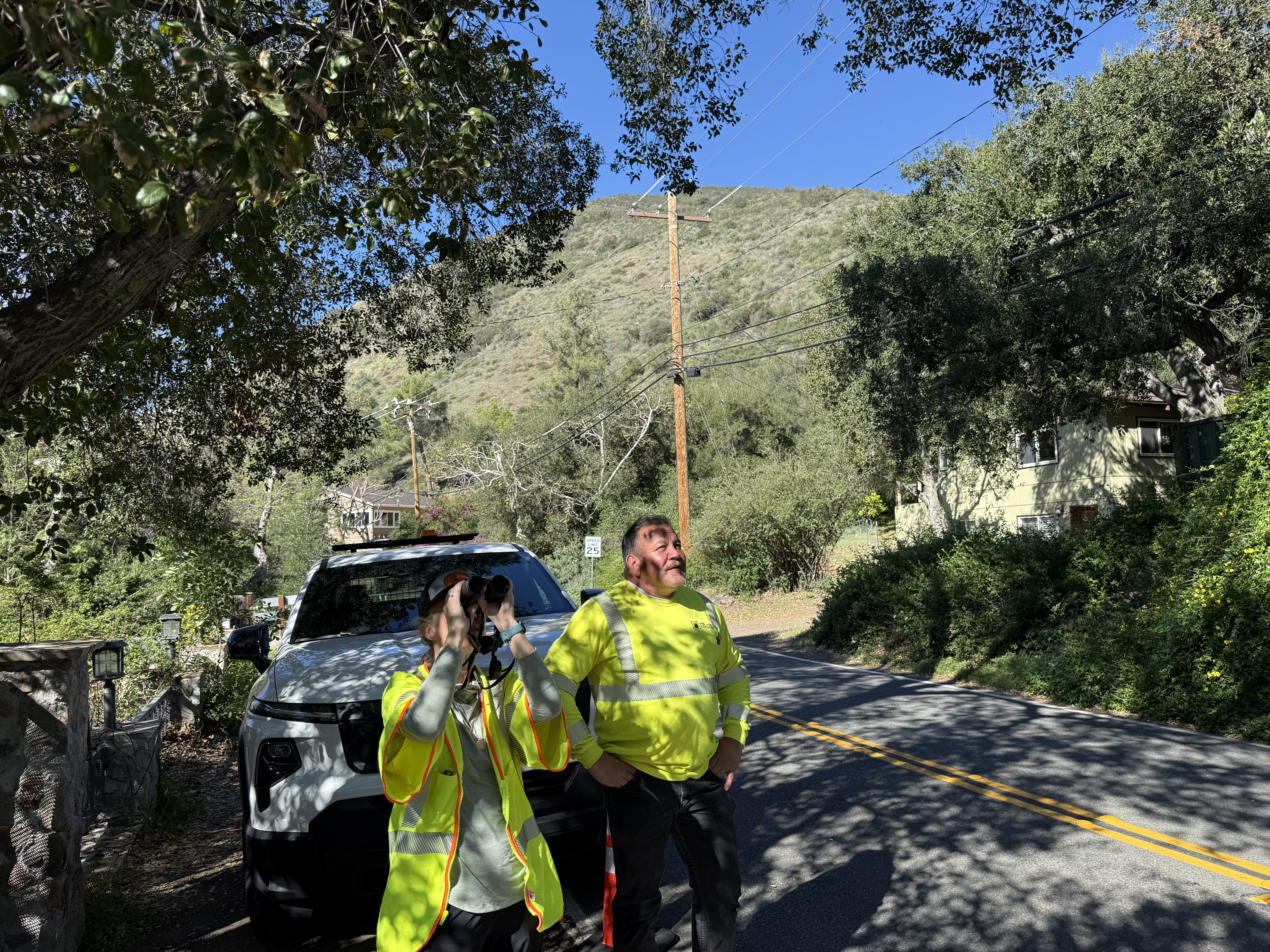
“Unless it’s an emergency repair, our work must stop when we detect an active nest with eggs or chicks,” Donohue said. “While we’re here to provide power, we’re also stewards of our environment.”
Progress on upgrades is obvious in places like Silverado Canyon, a known woodpecker hot spot, where nearly every other pole lining the winding roads is fiberglass.
“You can really see the difference here,” Yasumura said. “When we’d replace a woodpecker-damaged wooden pole for a new wooden pole in this canyon, we’d come back less than a year later — only to find it full of holes again. That doesn’t happen with fiberglass.”
Over 40,000 fiberglass poles stretch across SCE’s service area, with hundreds more on the horizon.
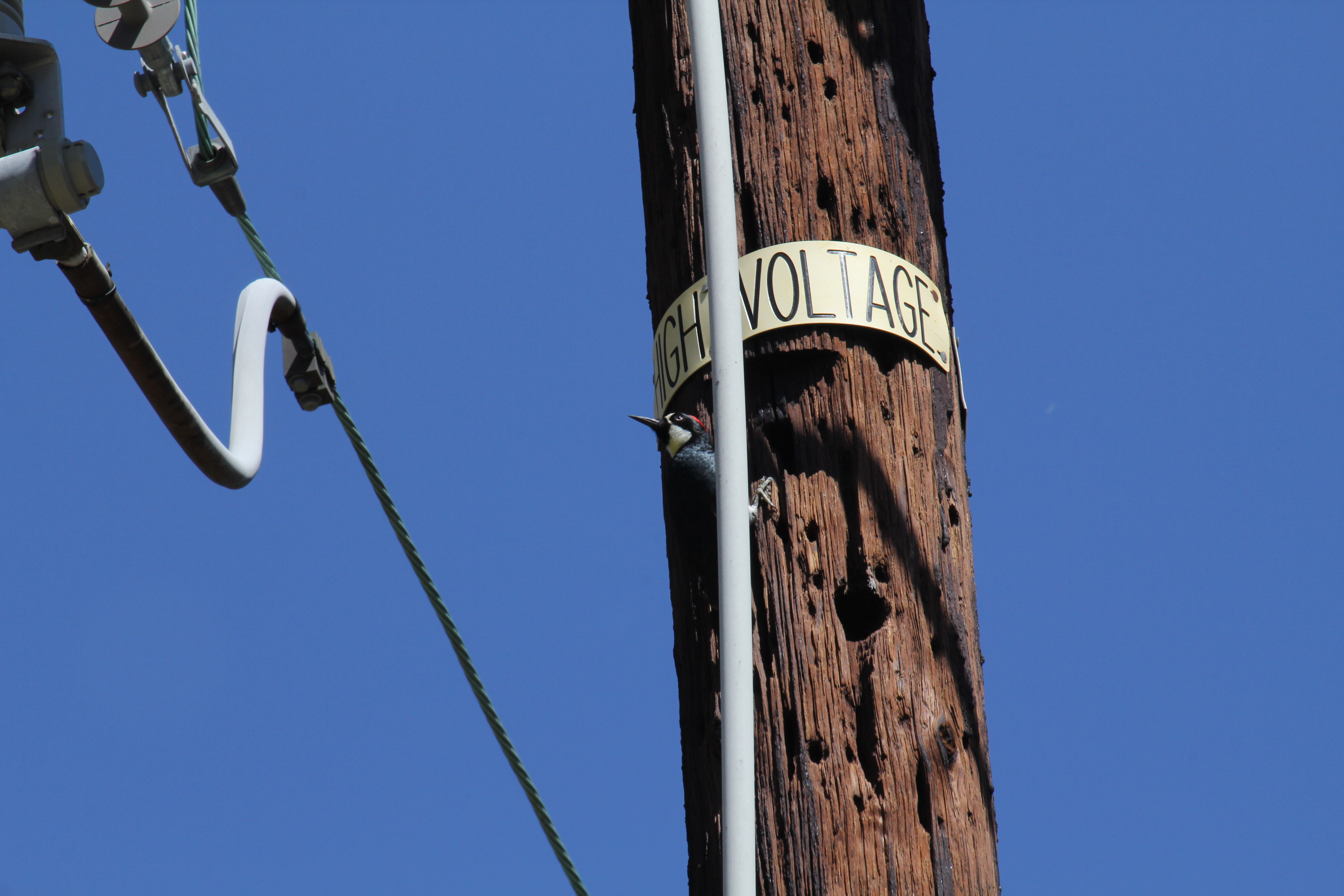
Leveraging technology is helping SCE identify which poles might need replacement. Drone‑based aerial inspections give crews a bird’s-eye view of equipment, allowing them to spot woodpecker activity on crossarms and pole tops that aren’t visible from the ground.
“We didn’t realize how much damage was happening up there until we started seeing things from above,” Donohue said. “Now we can take action before the woodpecker activity becomes a real safety issue.”
Together, those tools and practices help SCE crews and environmental teams plan their work to strengthen the grid, while avoiding unnecessary impacts on wildlife.
On National Woody Woodpecker Day, it’s a reminder that resiliency isn’t just about stronger materials, it’s also about learning how to coexist.
Communications for this program are funded by ratepayers.