

Emergency Upgrades After Equipment Floods




Emergency Upgrades After Equipment Floods

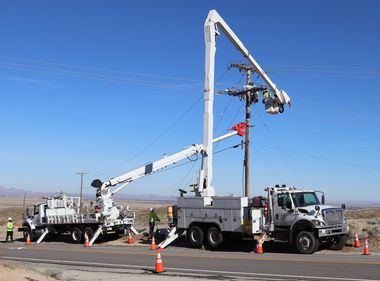
Overnight, when an underground substation suddenly began to fill with water, Southern California Edison crews immediately mobilized — rushing to get temporary equipment in place, so that Beverly Hills would wake up with power.
Southern California Edison crews expedite upgrades in Beverly Hills after a third-party water main burst, flooding an underground substation that powers nearly half the city.
Colton Walter
“Back in December, we had a third-party water main break, which led to the loss of an entire substation,” said Ajay Singh, district manager for the Santa Monica Service Center that serves Beverly Hills. “A substation is the heart of the city — it powers multiple neighborhoods, so that was a pretty significant loss for us.”
With water over 6 feet high and critical equipment submerged, the main source of power for many multifamily homes in the area was rendered useless. To get service to those customers, crews had to set up temporary equipment and reroute electricity through circuits that serve nearby neighborhoods.
The problem: Without the substation, those lines would not be able to sustain the added stress long term.
With the annual increase in summer electricity use looming, crews have been working around the clock to upgrade the remaining equipment, so that it can serve the community — even without the substation. That means rescheduling other work to prioritize this project and working with the city to get approval to work extended hours.
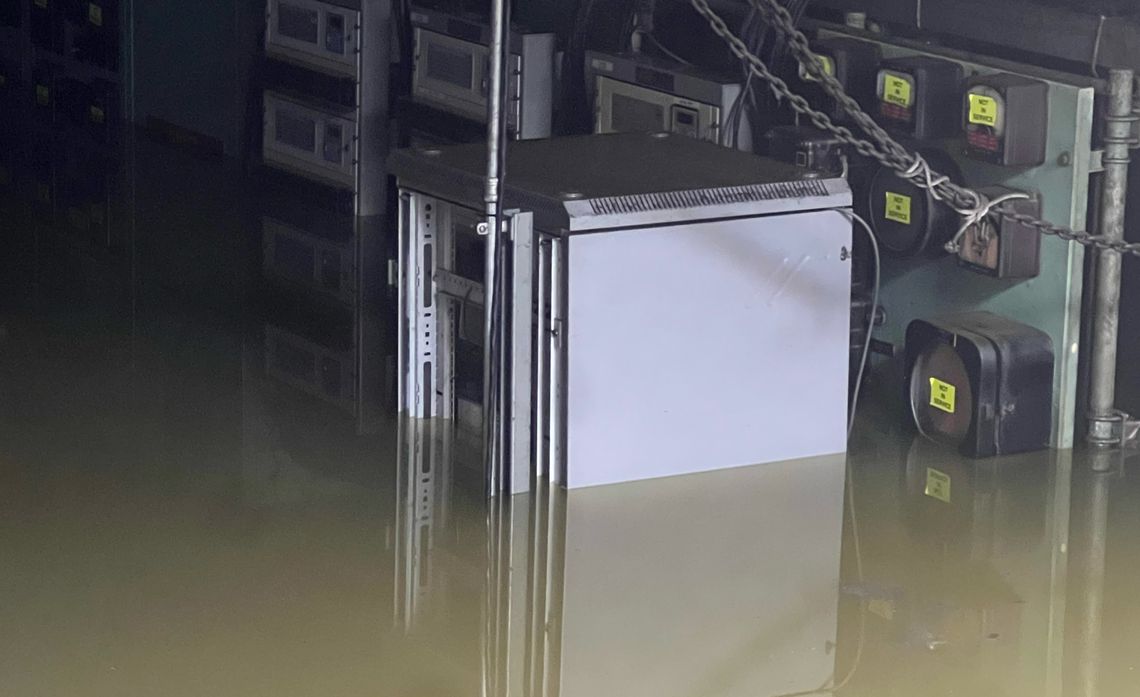
Critical electrical equipment sits submerged after a broken water main floods one of SCE's underground substations in Beverly Hills.
"We had planned to do much of this work within the next couple of years to proactively upgrade the lines and increase reliability for our customers, but with the loss of the substation we’ve accelerated all of that work,” said Jared Heldoorn, SCE general foreman on the project.
“We are trying to finish before peak electricity use hits in the summer, to avoid added strain on the circuits that are picking up the extra customers.”
The March heat wave served as a preview and proof of how important getting this work done quickly really is. Each circuit can only serve a certain number of customers, and when it takes on too much, it runs the risk of overloading. That means the potential of power outages for customers fed from those lines.
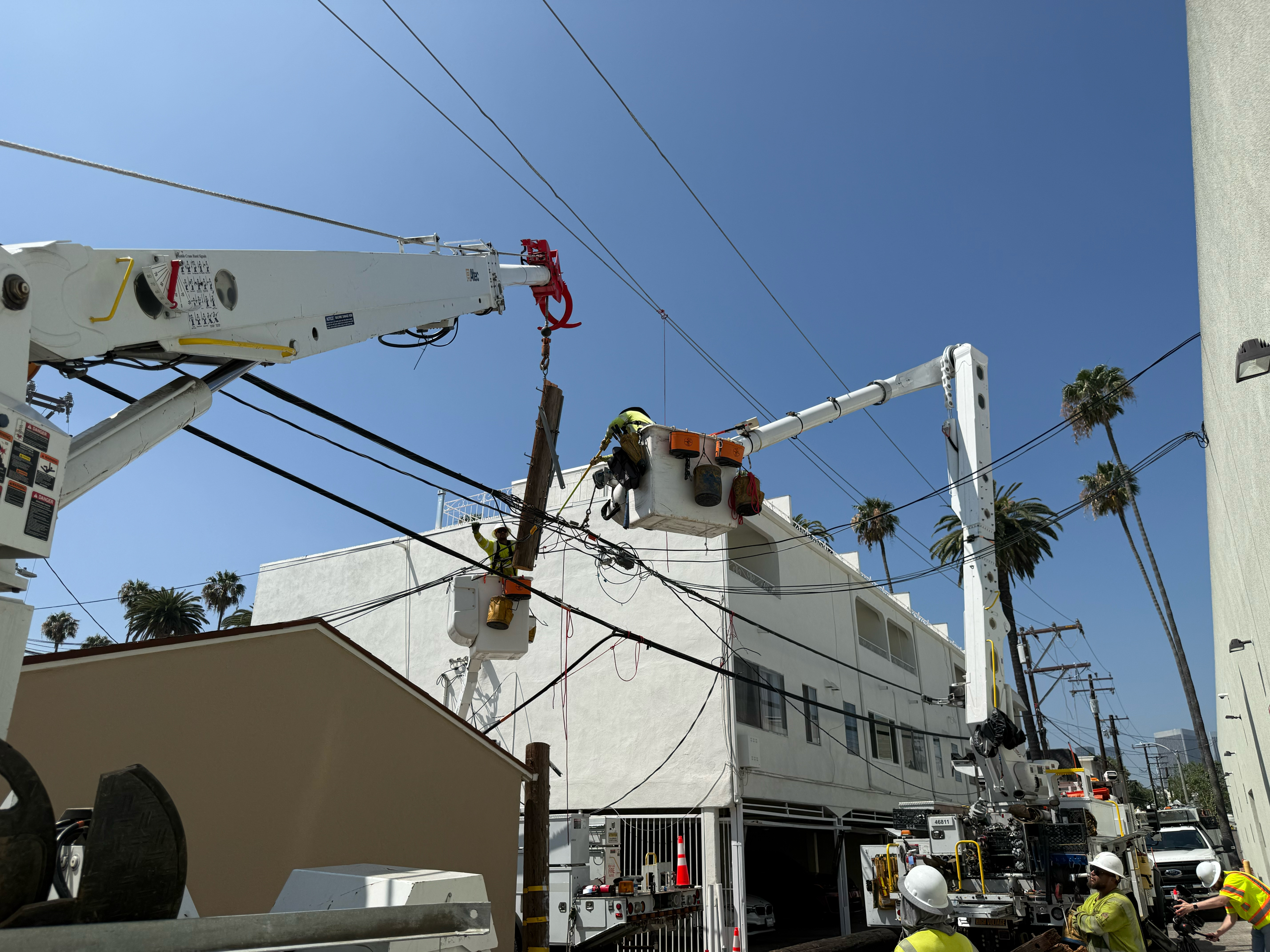
Crews are moving quickly to upgrade equipment, preparing the system for higher summer electricity demand.
To avoid that type of failure, it's been a strong push to safely upgrade the existing 4kV lines to a 16kV system — essentially quadrupling the capacity and increasing reliability for customers.
The work will involve half of Beverly Hills, and when finished, residents will see newer poles, coated wire known as covered conductor, and a much more resilient power grid.
“We do understand that this work impacts the community, and it can be frustrating for the residents, but we also take pride in our work and pride in being able to turn the lights back on and create a more reliable system,” Heldoorn said.
For more information on SCE's commitment to providing reliable service, visit sce.com/reliability.
Communications about grid resiliency are funded by ratepayers.