

Refurbished Transformers Increase Reliability


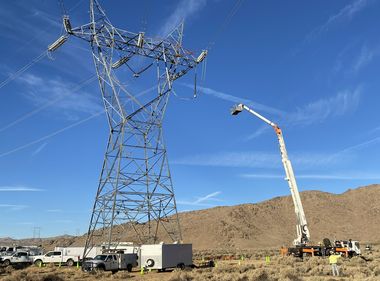


Refurbished Transformers Increase Reliability

It’s all fun in the sun until a California heat wave hits and air conditioners start running full blast day and night — straining the electric system’s equipment.
“When we have a heat wave and more people use AC to cool down, the extra demand puts a lot of pressure on the equipment that delivers power to communities,” said Joe Escudero, Southern California Edison’s Distribution Apparatus Shop manager. “When a transformer fails, it can cause power outages.”
As heatwaves strain the grid, SCE’s Distribution Apparatus Shop makes sure backup transformers are ready to roll.
Like a car being driven at full throttle for days without a rest and straining the engine, the odds of something breaking goes up. A transformer is a piece of equipment that lowers high-voltage electricity to a level that homes and businesses can safely use, and when it doesn’t have periods to cool down, it can break.
“When a power outage happens, it’s our job to help make sure that we have replacement equipment ready, so the outages are as short as possible,” Escudero said.
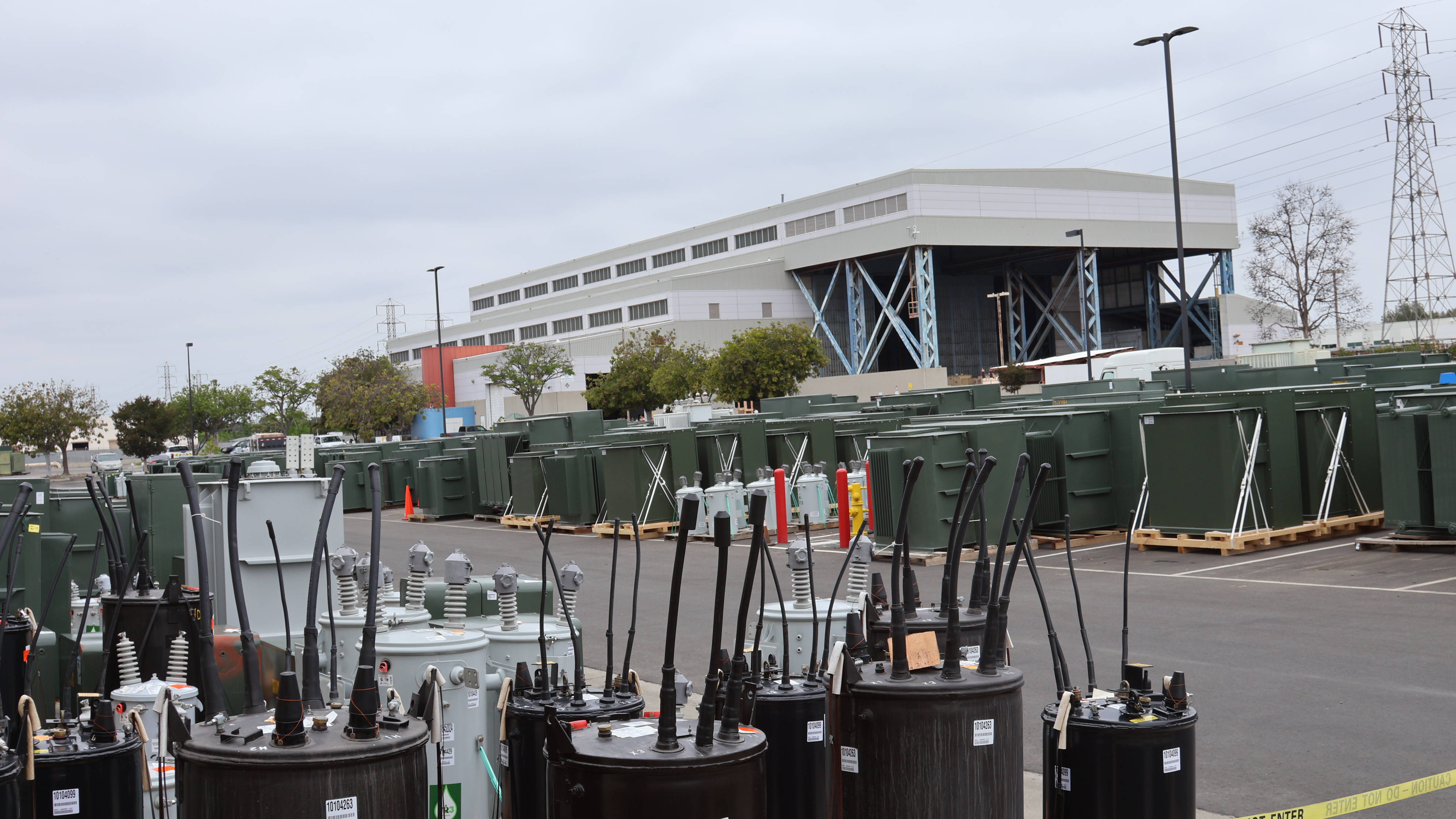
Thousands of transformers of different varieties — including underground, overhead and pad-mounted — are ready for reconditioning at the Distribution Apparatus Shop.
During an emergency, like a heat wave or other extreme weather events, regional inventories of new transformers can be depleted quickly. That’s where the DA Shop steps in. The DA Shop works year-round to keep a stockpile of refurbished transformers tested, repaired and ready to go.
“We specialize in emergency situations,” said Escudero. “We have around 2,000 transformers ready for reconditioning on site at all times.”
The reserve inventory comes from all over SCE’s 50,000-square-mile service area. Whenever a transformer in the field is replaced, the old one is sent to the DA Shop to determine whether it should be retired or can be given a second life.
The most common repair technicians make involve weld leaks. Before a transformer can be sent back into the field, it must go through rigorous testing.
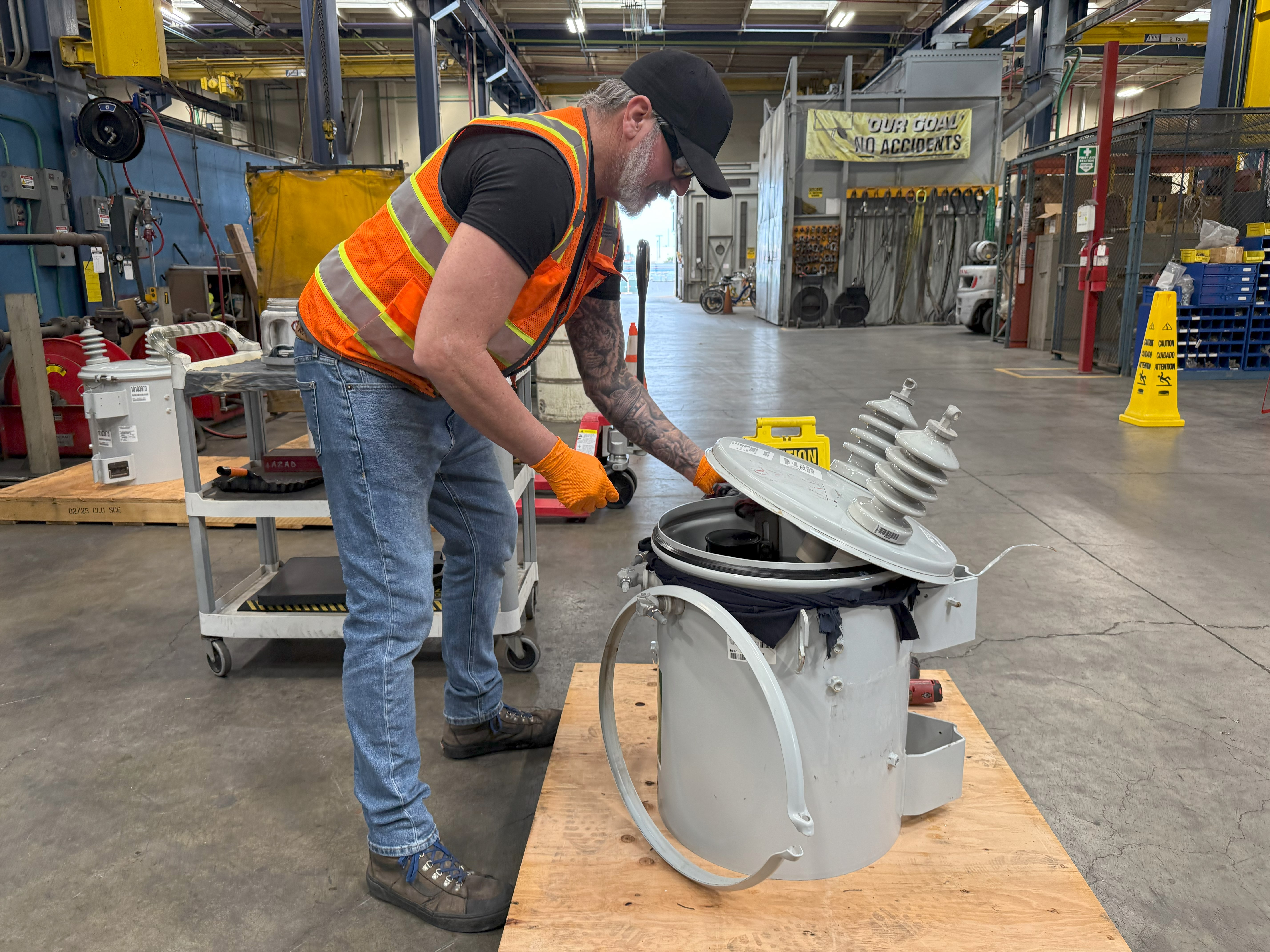
Transformer Inspection Steps:
1. Visual Inspection: Technicians start by looking for signs of wear, damage or leaks — anything that could affect performance or safety.
2. Reconditioning: Based on the issues found, technicians may replace bushings, gaskets, seals and fuses or complete other repairs.
3. Testing: Next the transformer heads to a test bay in the shop where technicians make sure it meets electrical standards and is safe for deployable inventory.
4. Painting: After passing all tests, the transformer gets a fresh coat of paint to look brand new.
5. Ready for Action: The transformer waits in inventory, ready to jump back into action when the electric system needs it most.
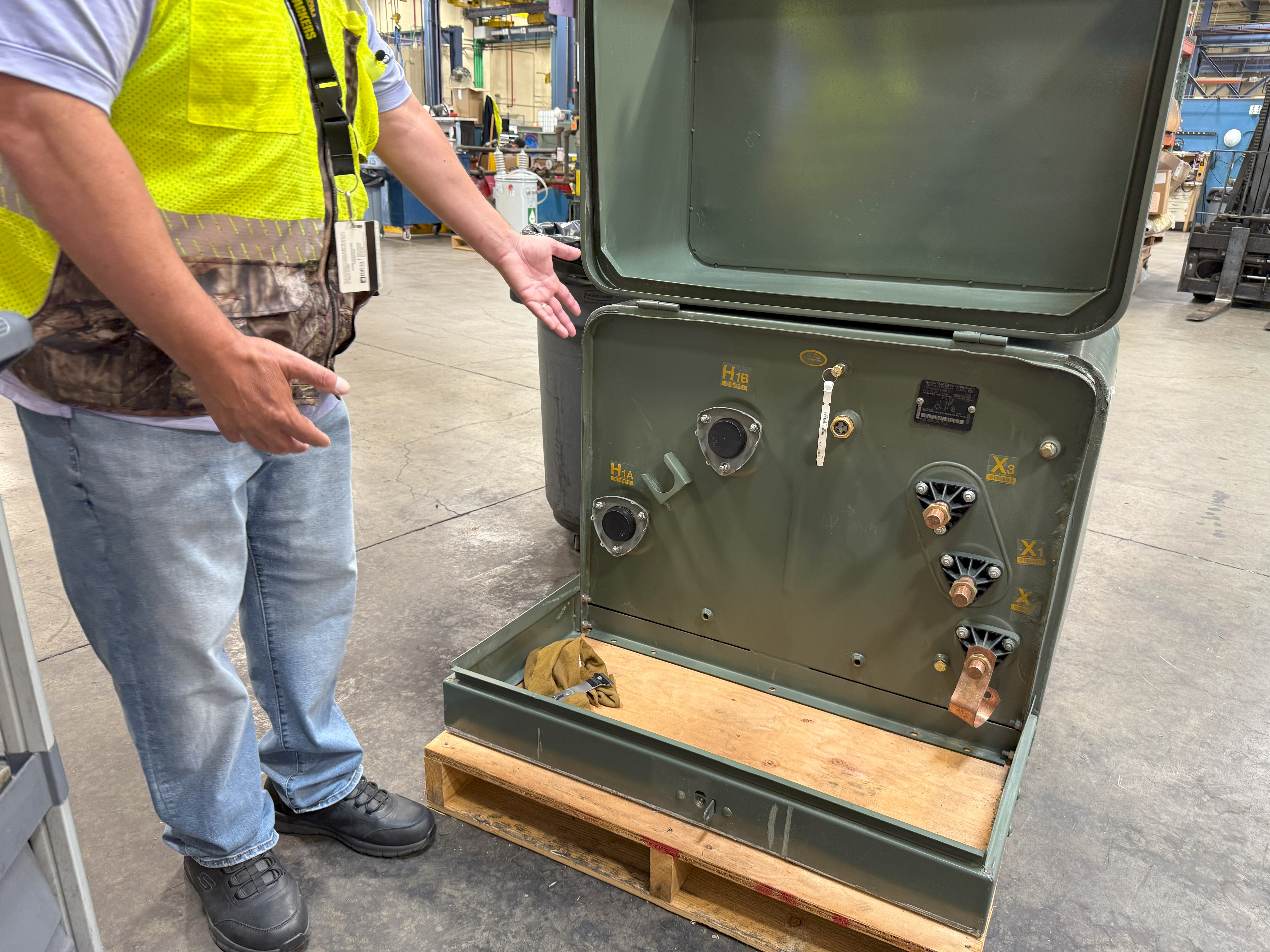
Beyond repairs, the shop also tracks recurring issues in the transformers — like the same pattern of problems on certain models — to alert SCE engineers and manufacturers. This prevents a repeat in the future, improving equipment quality, grid reliability and reducing power disruptions.
The shop also helps prevent used equipment from being sent to the landfill when it breaks.
“We take a lot of pride in what we do, there’s camaraderie and shared focus,” Escudero said. “They may not hear it or see it, but we are doing the best we can to help make sure our customers have as few disruptions to their power as possible.”