

Ocean Rescue Efforts Rise Amid Algal Bloom




Ocean Rescue Efforts Rise Amid Algal Bloom

When a nearly 600-pound sea lion named Neptune washed ashore Seal Beach, the odds were stacked against him. Stricken by a toxin from algal blooms, Neptune was rescued by the Pacific Marine Mammal Center in Laguna Beach — his survival made possible by expert care, community effort and support from a Southern California Edison employee fundraiser.
As algal blooms, fueled by an unprecedented winter, threatened hundreds of marine mammals, Neptune’s story is just one ripple in a much larger wave of ocean rescue this year.
“This year’s algal bloom was beyond anything we’ve ever experienced in California — ever,” said Glenn Gray, CEO of the PMMC. “From January through the end of June, we responded to 490 rescue calls in Orange County alone. That’s more than double last year’s total of 195 calls.”
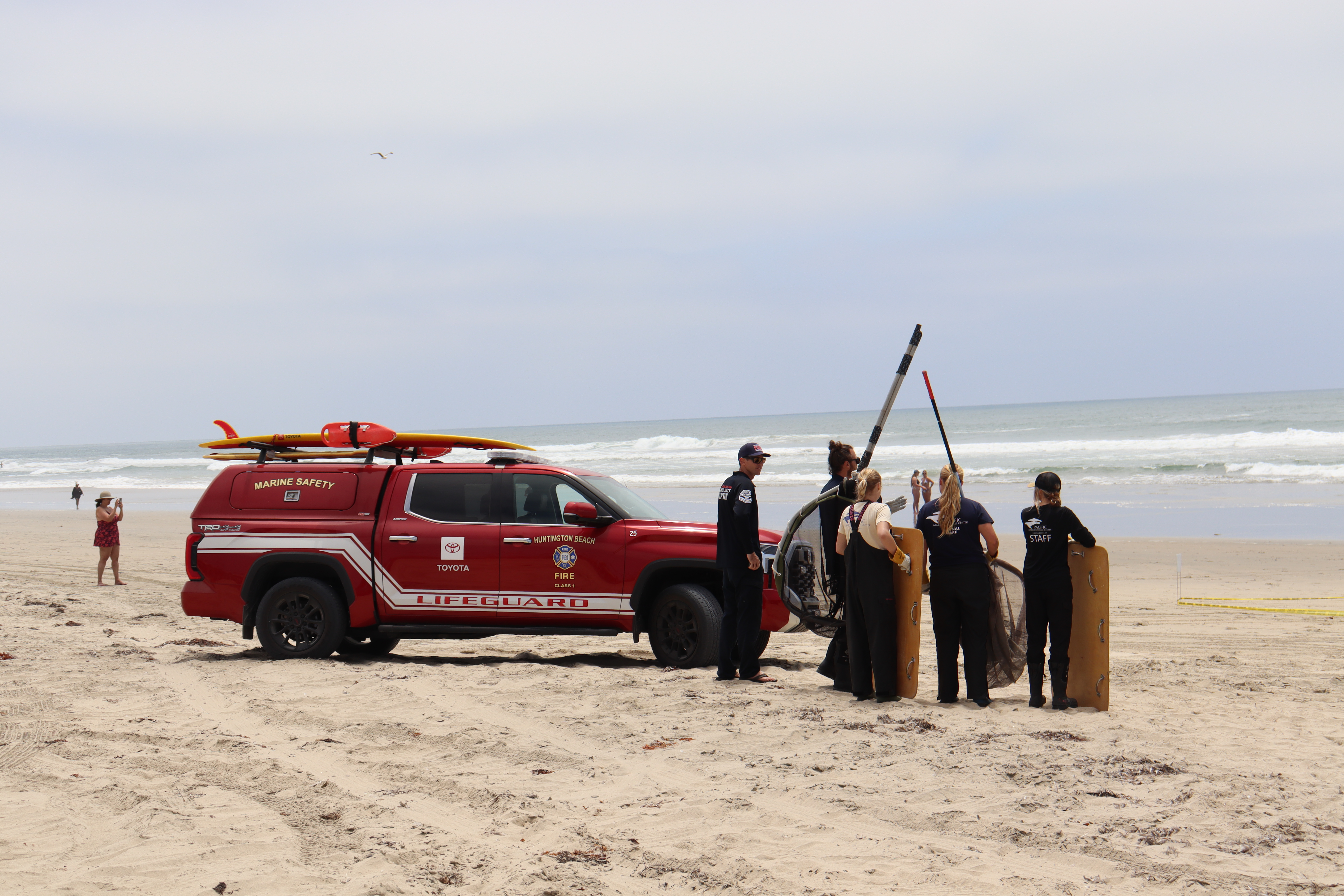
Lifeguards and Pacific Marine Mammal Center responders work together to safely transport stranded marine mammals to an emergency care center.
The reason behind the surge was a perfect storm of environmental factors — a combination of ocean currents and runoff from wildfire-related pollutants that supercharged toxic algal blooms along the coast. Domoic acid toxicosis (DAT), the culprit behind the crisis, is a neurological condition caused when marine mammals eat fish contaminated with harmful algae.
DAT causes a slew of symptoms similar to seizures, making affected animals disoriented and unpredictable. Treating the condition isn’t simple. Patients require intensive care, including intravenous fluids to flush out toxins, anti-seizure medications and specialized nutrition.
“Suddenly we were seeing neurological symptoms in animals at a scale we’d never dealt with before,” said Gray. “If we could get to them early enough, before the toxicity reaches such a high level of concentration within the body, we could rehabilitate them.”
When SCE employees learned of the danger the sea life was facing, they wanted to help. Through Edison’s Employee Giving program, employees can donate and/or launch fundraisers to give back to communities and support nonprofit organizations — and Edison International Foundation gives a dollar-for-dollar match up to $2,000 annually per employee.
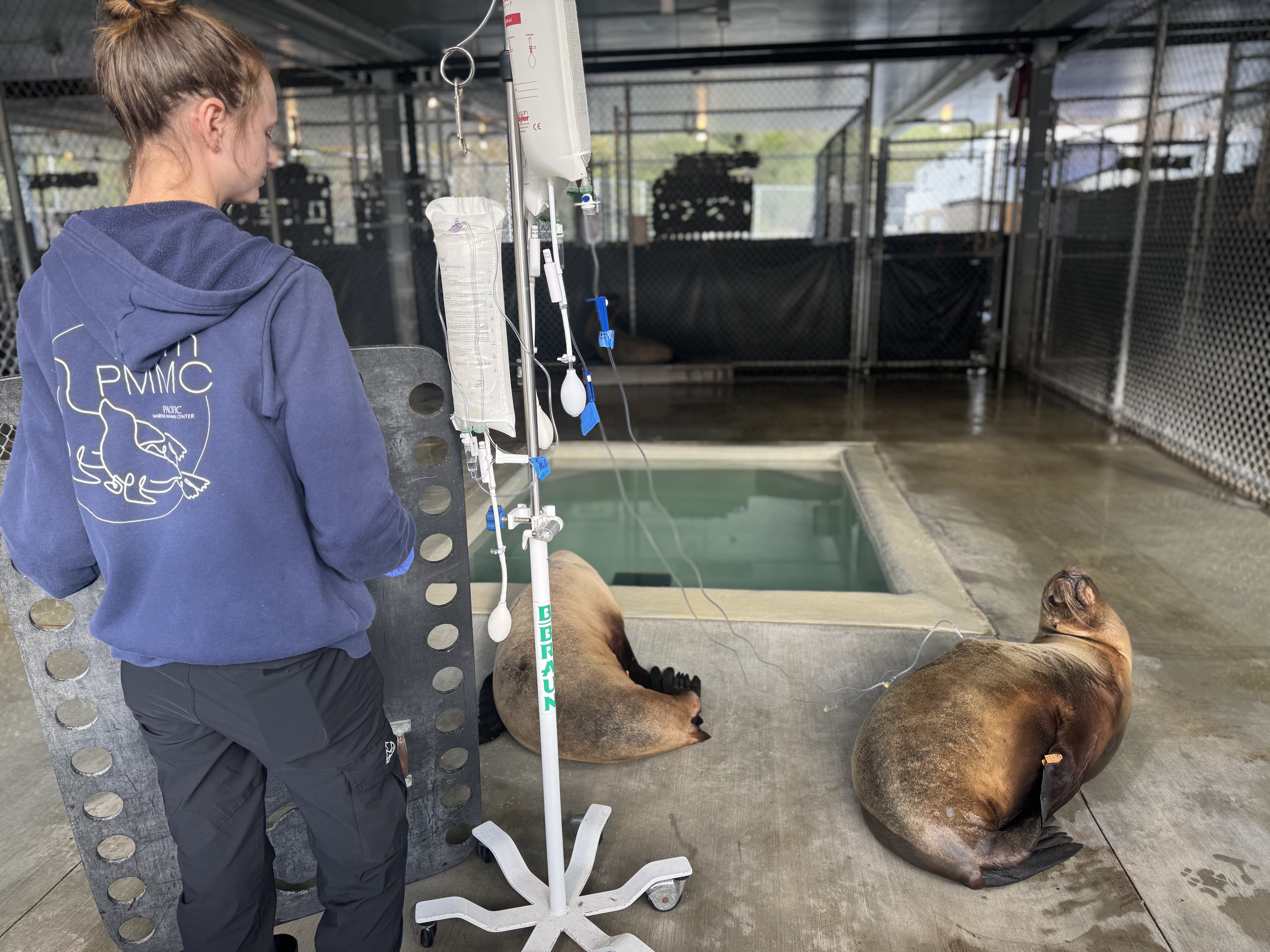
A Pacific Marine Mammal Center patient affected by toxic algae receives intravenous fluids to flush toxicity from its system.
“It’s inspiring to see our employees bring their passion to causes and organizations they care about — and we’re proud to support them,” said Liz Seelman, Edison International director of Corporate Relations and Philanthropy. “Thanks to strong employee participation in this fundraiser, we were able to award over $25,000 to PMMC, made up of employee donations, company matching funds and a contribution from the Edison International Foundation.”
While sea lions like Neptune were the most affected, other marine mammals including elephant seals, harbor seals, fur seals, dolphins and even whales were also impacted. At the peak, PMMC housed 110 patients simultaneously, far exceeding their usual 40-50.
Throughout its 50 years of rescuing and rehabilitating marine life, the center has also contributed to ocean advocacy and research. While treating hundreds of sick animals, the team collected biological samples that are now being studied for human brain research at institutions like Seattle Children's Hospital.
After six months of emergency response, PMMC saw cases of DAT taper off in June as the toxic algal bloom dissipated with changing ocean conditions. As for Neptune, after spending an encouraging month in rehabilitation and showing no more symptoms of DAT, he returned to his ocean home.
“Helping these animals heal and watching them return to that home — strong, free and wild — is the most rewarding part of what we do,” said Gray.
For more information on Edison International’s commitment to giving back, visit edison.com/community.