

How Much Water Can California Expect This Year?



 holds the scale tool while Michael Molina balances the pole full of snow between the hooks to determine the snow's weight. =http://energized.staging1.iprdev.com/_gallery/get_file/?file_id=68225b583d6332bd55bcb2c7&file_ext=.jpg&page_id=68226b6e3d63321ba4bcb2c2)

How Much Water Can California Expect This Year?

From December through April, Southern California Edison hydrographers Michael Molina and Emil DeMillio snap into a pair of skis and shred the snow-covered Sierra Nevada mountains.
While they have a blast doing it, the winter sport isn’t just for fun — it’s a crucial part of their job.
SCE hydrographers measure the snowpack in the Sierra Nevada mountains to help determine the state's water supply.
“We pop on these cross-country skis that allow us to swap between gliding and walking,” said Molina. “We have to cover some far distances and this beats trekking through the snow on foot.”
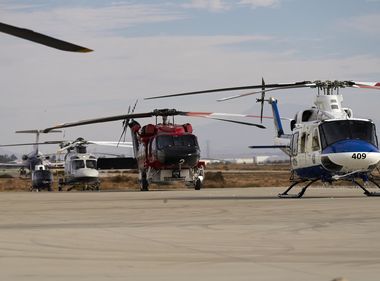
Molina and DeMillio are two of three hydrographers based out of Big Creek, the home of SCE’s hydroelectric project. Each year they partner with SCE Aircraft Operations to travel into remote areas of the surrounding mountains and measure the season's snowpack.
As California gets a large portion of its water from snowmelt, these calculations are critical for managing the state’s water supply.
“Water is so precious in our society,” DeMillio said. “The modeling we report back is important not only for SCE to estimate how much clean energy we can expect to produce through the hydro power houses, but also for reservoir management, farming, agriculture and recreational use.”
Three to four times a year, they travel to about 13 locations along the more than 400-mile-long mountain range, deciphering how much water is hidden within the snow. The helicopter drops them off at powdered clearings tucked in the hills where they begin their measurements.
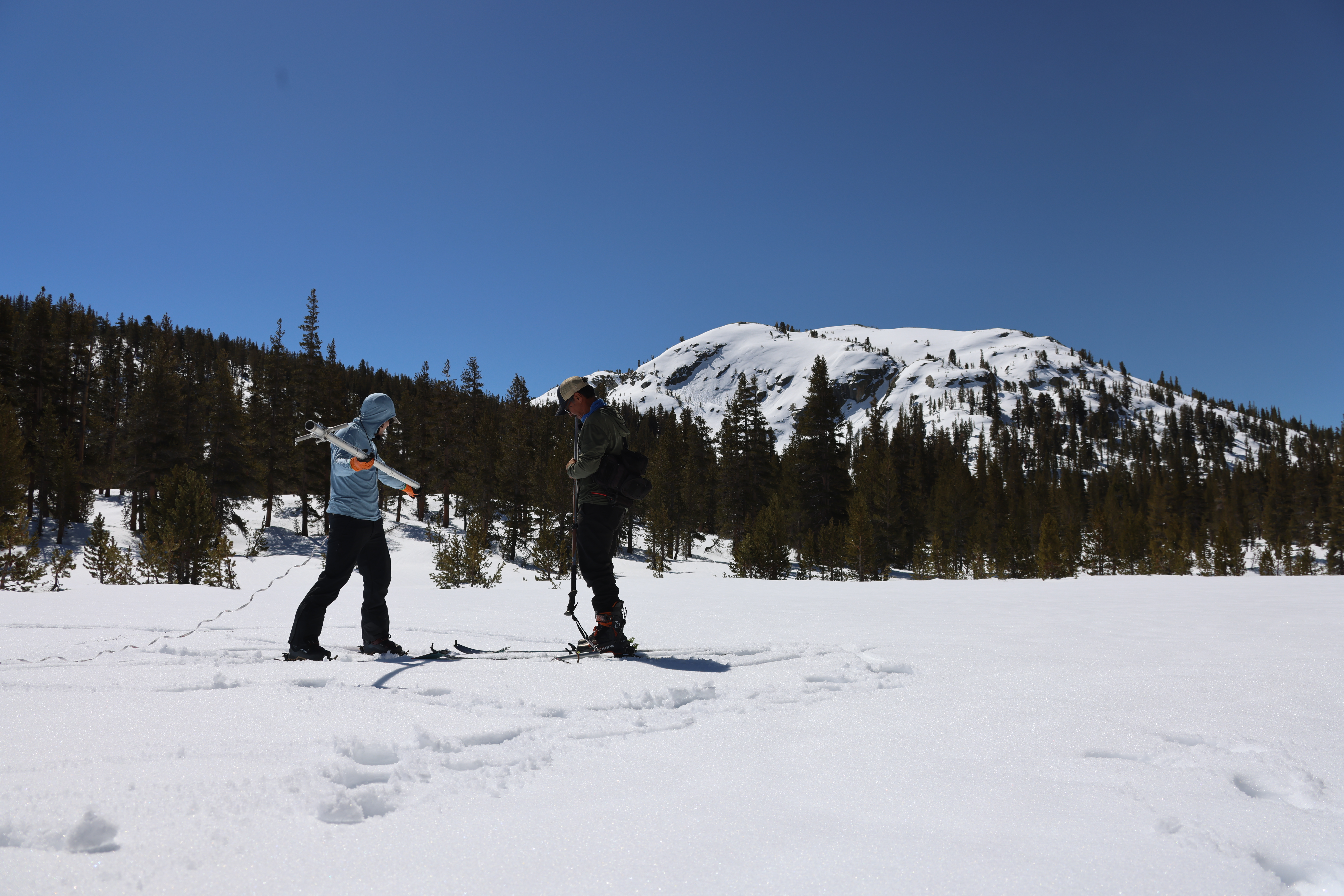
SCE's hydrographers complete the snowpack measurements at about 13 different locations in the Sierra Nevada mountains.
Working in teams of two, one person holds the scale, weighs samples and takes notes. The other is stabbing the snow with a long hollow pole. Together, they repeat this process several times, sliding from one end of the snow course to the other.
“When you collect a snow core sample, you'll see the height of snow and can weigh it,” Molina said. “That gives you a density and from there you can estimate how much water is in the snow.”
Their findings are shared with the California Department of Water Resources to help determine if it will be declared a dry year. So far, the snowpack is at about 70% of normal, which borders drought conditions.
As we head into wildfire season, that number is worrisome for SCE wildfire scientist, Tom Rolinski — foreshadowing what could be an elevated fire season.
“Lower than normal snowpack typically results in drier fuel conditions with a greater potential for fire activity,” Rolinski said. “This is because these areas typically have fewer days under snowpack, or at least under melting snow conditions, which causes the vegetation to be less irrigated and increases the risk for wildfires.”
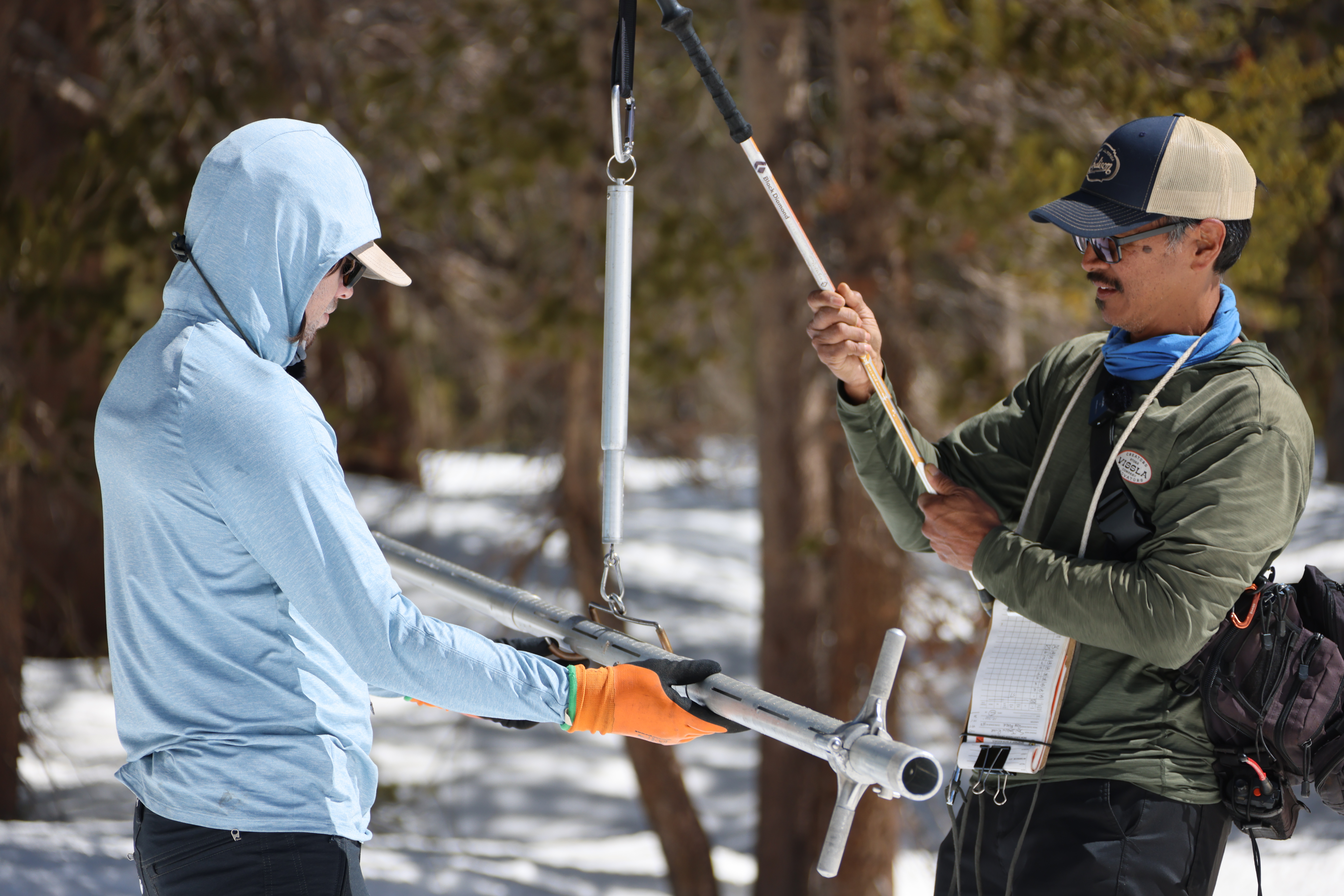
Emil DeMillio (R) holds the scale tool while Michael Molina balances the pole full of snow between the hooks to determine the snow's weight.
SCE’s power generation team also uses the data to forecast the amount of water that will move through its Big Creek Hydroelectric Project and how much is available for recreationists who enjoy the many SCE reservoirs including Shaver Lake.
The hydro system uses a network of lakes and reservoirs to store the water so it can be used to power customers during periods when demand for electricity is highest.
“In hydro, water is our fuel,” said Ryan Kritsch another SCE hydrographer. “So, this helps to properly manage that fuel. The water and power generated here flows all the way down through Southern California and into Los Angeles.”
For more information on clean power, visit edison.com/cleanenergy.