

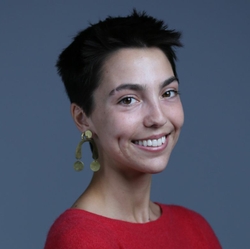
Before Kaleb Flem ever helped safeguard the technology behind Southern California Edison’s power grid, he was immersed in a different kind of code — learning Arabic and Russian at a lightning pace to help the military decipher signals halfway around the world.
But for Flem, a United States Army veteran and senior manager of SCE’s cybersecurity architecture, the language of service has always been about more than words — it’s about legacy, commitment and leading others to their potential.
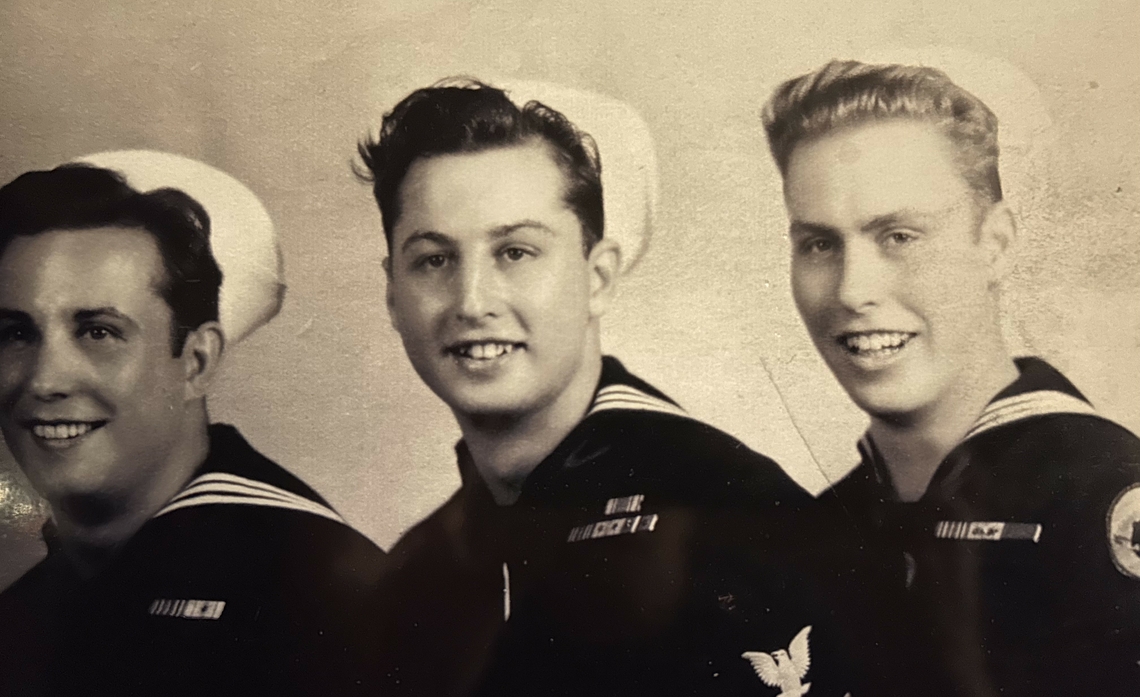
“I always grew up with this service mindset because my whole family is military, going back as far as I can trace,” said Flem. “My dad was in Desert Storm and my grandpa was in World War II and the Korean War.”
Flem launched his own military career in 2012, moving from his Ohio hometown to California’s shoreline to train as a cryptologic linguist — a role that required a year and a half of full-immersion Arabic learning.
“I’ve always really enjoyed languages, so I went into the Army knowing that’s what I wanted to do,” he said. “I was in study hall every day, but I loved it.”
After mastering Arabic, he deployed to Afghanistan for six months and worked in signals intelligence, intercepting enemy communications to support special operations missions. Later, he returned to the States to learn Russian and transfer from full-time service to the Army Reserve.
Throughout the rigor of training and deployment, Flem valued teamwork and strong leadership. These qualities have shaped Flem’s current approach to leading three SCE teams that vet, design and integrate new technologies — to protect against cyber threats — without disrupting critical systems.
“It doesn’t matter if it’s the best cybersecurity tool in the world if it shuts off the power,” said Flem. “That’s why these teams are working on over a dozen new technologies, coordinating projects and managing technology contracts.”
He also partners with Information Technology teams to coordinate cybersecurity projects and make sure they meet security standards, stay on schedule and integrate smoothly with SCE’s existing technology. The technical side, however, is only part of the job — Flem’s favorite role is mentoring.
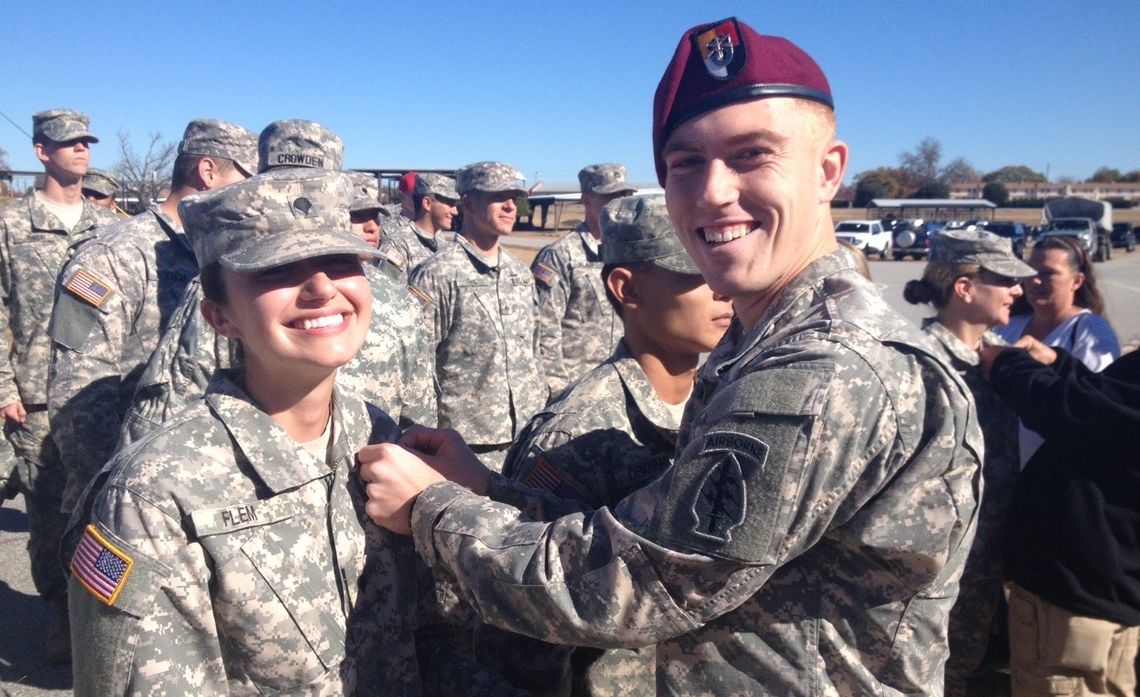
Kaleb Flem (right) pins parachutist wings on his wife during her U.S. Army Airborne School graduation, a milestone they celebrated while serving together.
“You can’t do as much on your own as you can if you enable and grow other people,” he said. “It’s about knowing when to delegate, when to get your hands dirty and always investing in your team.”
Because Flem remains in the Army Reserve, his military chapter didn’t close when he joined SCE. In fact, he was activated for a year to support a Russian cyber mission — drawing on the language skills he had mastered years ago. Leaving his civilian role could have been stressful, but Flem was able to lean on SCE’s resources like military leave policies and support from leadership to focus on his mission without worrying about his career.
“SCE was insanely supportive when I got activated. It was awesome and super easy,” he said. “That made it a lot less stressful for myself and my family.”
Flem’s commitment to service continues through his membership in SCE’s Valor Business Resource Group, a community for veterans and military-connected employees. The employee group advocates for service members, educates employees about military benefits and supports programs to help veterans transition into civilian careers. For Flem, it’s a way to give back and stay connected.
“It’s not about putting my service on a pedestal,” he said. “It’s about helping others understand the support that’s here and making sure veterans feel they belong.”
For more information on SCE career opportunities, visit edisoncareers.com.

 recieves a parachutist wings pin from his sister during his U.S. Army Airborne School graduation.=http://energized.staging1.iprdev.com/_gallery/get_file/?file_id=690e9f843d63322489267906&file_ext=.jpg&page_id=690d2eb23d63320d2138f392)
, Kaleb Flem’s grandfather, served in the U.S. Navy during World War II, inspiring Kaleb to continue the family tradition of military service.=http://energized.staging1.iprdev.com/_gallery/get_file/?file_id=690d0d703d6332402438f3af&file_ext=.jpg&page_id=690d2eb23d63320d2138f392)
 pins parachutist wings on his wife during her U.S. Army Airborne School graduation, a milestone they celebrated while serving together.=http://energized.staging1.iprdev.com/_gallery/get_file/?file_id=690d0d663d633266e238f39d&file_ext=.jpg&page_id=690d2eb23d63320d2138f392)