Nestled at the base of the San Gabriel Mountains, Southern California Edison Senior Electrical System Inspector Raymond Ramirez is prepping for a flight — but not the kind you board. As a drone pilot, his aircraft is barely larger than a shoebox.
Near dry, yellowed hills in a Glendora neighborhood, he toggles the controller, directing the drone toward a distribution pole, capturing still images from a variety of predetermined angles.
“Flying drones gives us eagle eyes,” said Ramirez. “It helps us check on electrical equipment, especially in high fire risk areas, looking out for anything that could compromise the system.”
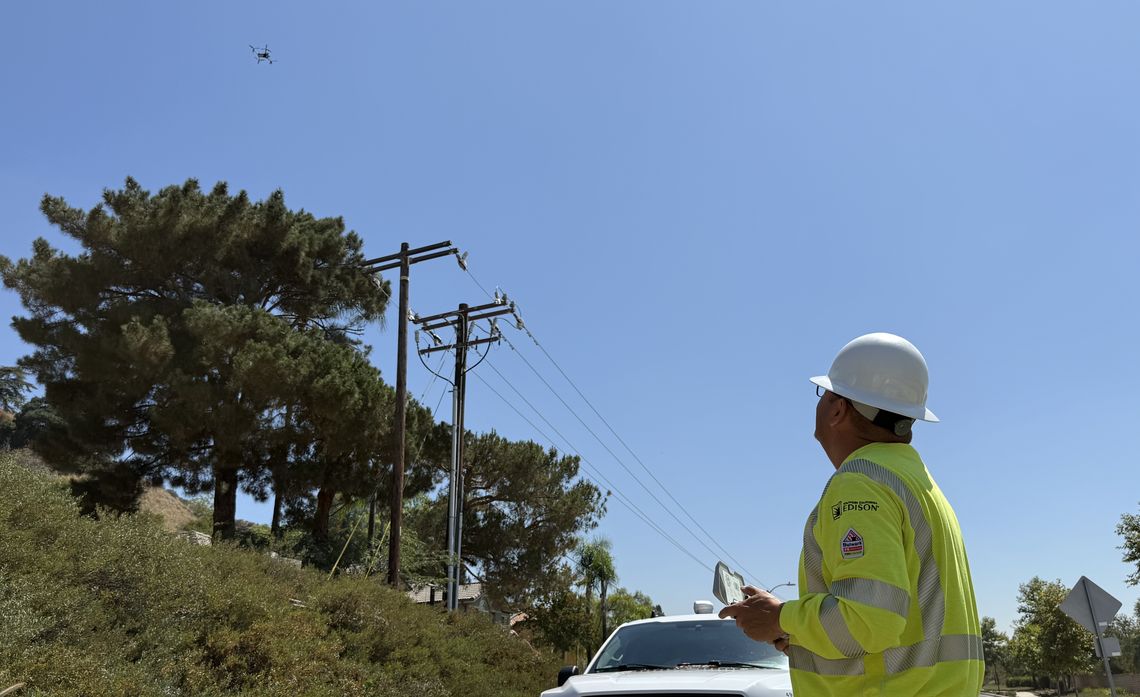
Raymond Ramirez’s flight path follows a standardized pattern to create a consistent, thorough documentation of each structure.
The aerial view grants Ramirez a perspective impossible to achieve with ground inspections alone. The vantage point reveals any potential issues requiring repair or replacement, including missing or loose cotter pins used to secure power lines, woodpecker damage to poles and crossarms, animal nests in insulator covers, frayed conductors and more.
Ramirez is one of more than 100 team members and contractors who conduct approximately 450,000 structure inspections annually across SCE’s 50,000-square-mile service area. Over half of those inspections target high fire risk areas as part of SCE’s Wildfire Mitigation Plan.
“We don’t take chances, especially in high fire risk areas,” Ramirez said. “A thorough inspection means that when the drone is in the air, we’re collecting quality pictures of every single angle of that equipment.”
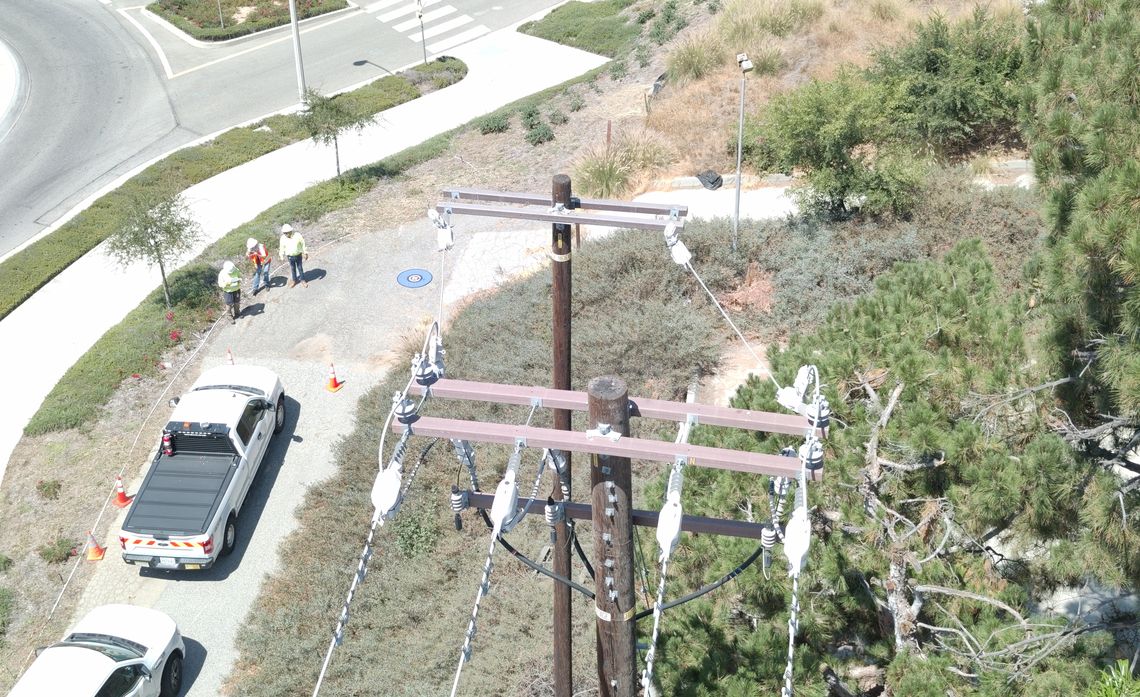
Drones have proven effective in catching potential ignition risks among the roughly 250,000 distribution poles and transmission towers in SCE’s high fire risk areas. While SCE uses helicopters for inspections in more rural areas, drones — which make up 99% of all of SCE’s aerial inspections — work best for residential and densely populated areas. In addition to being quieter, drones can zoom in and capture additional angles and details.
Image quality and safety measures continue to improve as drone technology increases. Enhanced features like better camera resolution and wind stabilization enable clearer, smoother shots.
“Clearer imagery also benefits everyone that comes into contact with those pictures of equipment," Ramirez said.
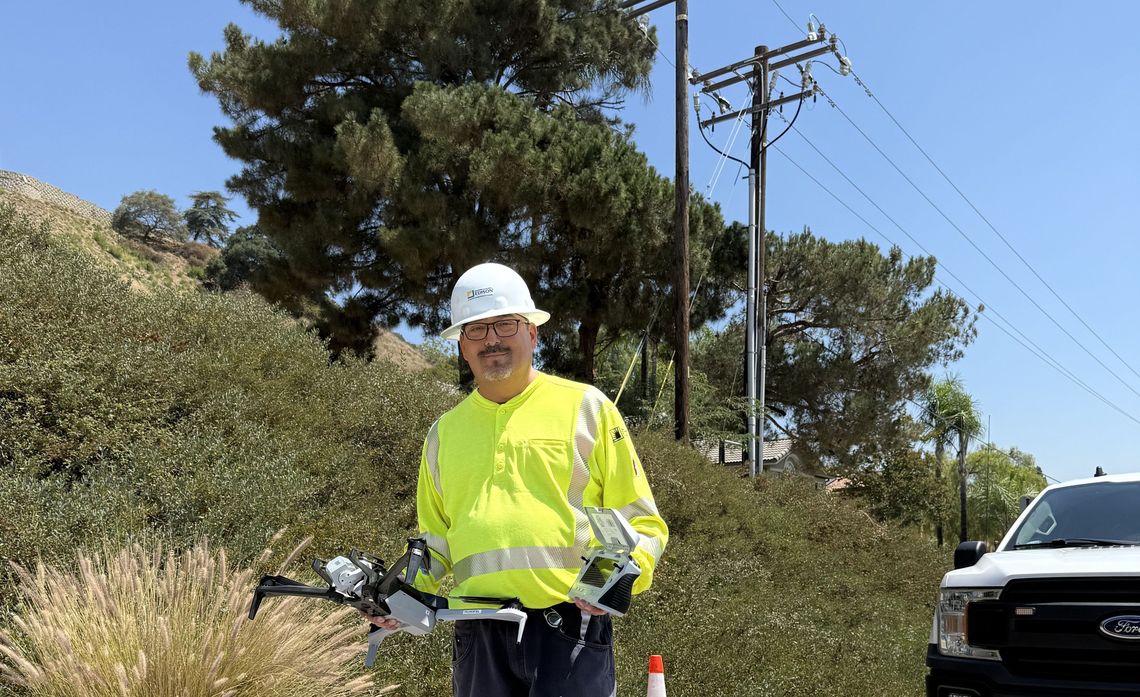
As a licensed drone pilot of four years, Raymond Ramirez has photographed hundreds of distribution lines to reduce the potential of utility-caused ignitions in high fire risk areas.
After landing the drone, Ramirez thoroughly checks the detailed images of equipment before sharing with a quality review team. From there, any issues with equipment get flagged and a crew is sent to complete repairs as safely and quickly as possible.
“The more we look out for the integrity of our equipment — making sure that it hasn’t deteriorated and quickly addressing it if it has — the more we reduce the risk of wildfire,” said Oscar Martinez, SCE senior supervisor of Inspections.
Though the inspection process is required by the California Public Utilities Commission, compliance is only one piece of what motivates SCE’s Inspections team. For Martinez, who oversees the work of Ramirez and 10 other inspectors, the job is about protecting lives and communities as if they were his own.
“If it was my home and my kids around that pole, how would I want someone to inspect it?” said Martinez. “That’s how we approach every job.”
To opt in for email notifications of drone and helicopter inspections, go to sce.com/outagealerts and select the “email” option. Customers receive at least a few days or weeks notice, depending on the flight schedule.
For more information on SCE's wildfire mitigation efforts, visit sce.com/wildfire.